8 hr
Punta Cana: Saona Island Speedboat & Catamaran Escape
- Expert local guide
- Small group
- Skip-the-line access
- Free cancellation
Saona Island Dominican Republic Excursion — Bayahibe Boat Departures & Cotubanamá Access
Wide reefs answer the morning tide, palms lean toward light.
Compare fares, pick the fit — all bookings are mobile-voucher and eligible for free cancellation where shown.
8 hr
11 hr
12 hr
Both islands sit off the same southeastern coast, but they deliver different days: choose the saona island dominican republic excursion for beach scale and natural pools, and Catalina for reef snorkeling in clearer water.
|
Top pick Saona Island |
Catalina Island | |
|---|---|---|
| What the day is built around | Beach lounging, natural pool, island-wide walking beach | |
| Reef snorkeling and coral-wall diving | Departure port and travel time | Bayahibe, boat 25–45 min |
| La Romana, boat 25–45 min | Snorkeling quality | Shallow, sandy, mostly calm swimming |
| Clear water, coral reef, better visibility | Crowd levels | High — largest island, big catamaran groups |
| Moderate — smaller uninhabited island | Price | $55–$85 pp standard tours |
| $80–$120 pp standard tours | Best for | Families, beach days, photo-friendly sandbanks |
| See tickets & prices |
Verdict: Pick Saona for a full beach-and-culture day with room to roam, and Catalina if underwater visibility and reef life matter more than shoreline space.
Hand-picked experiences loved by thousands of travelers
8 - 11 hours
Free Cancellation
Escape the crowds on an intimate boat journey to Saona Island, featuring pristine beaches, turtle conservation, and snorkeling.
11 hours
Free Cancellation
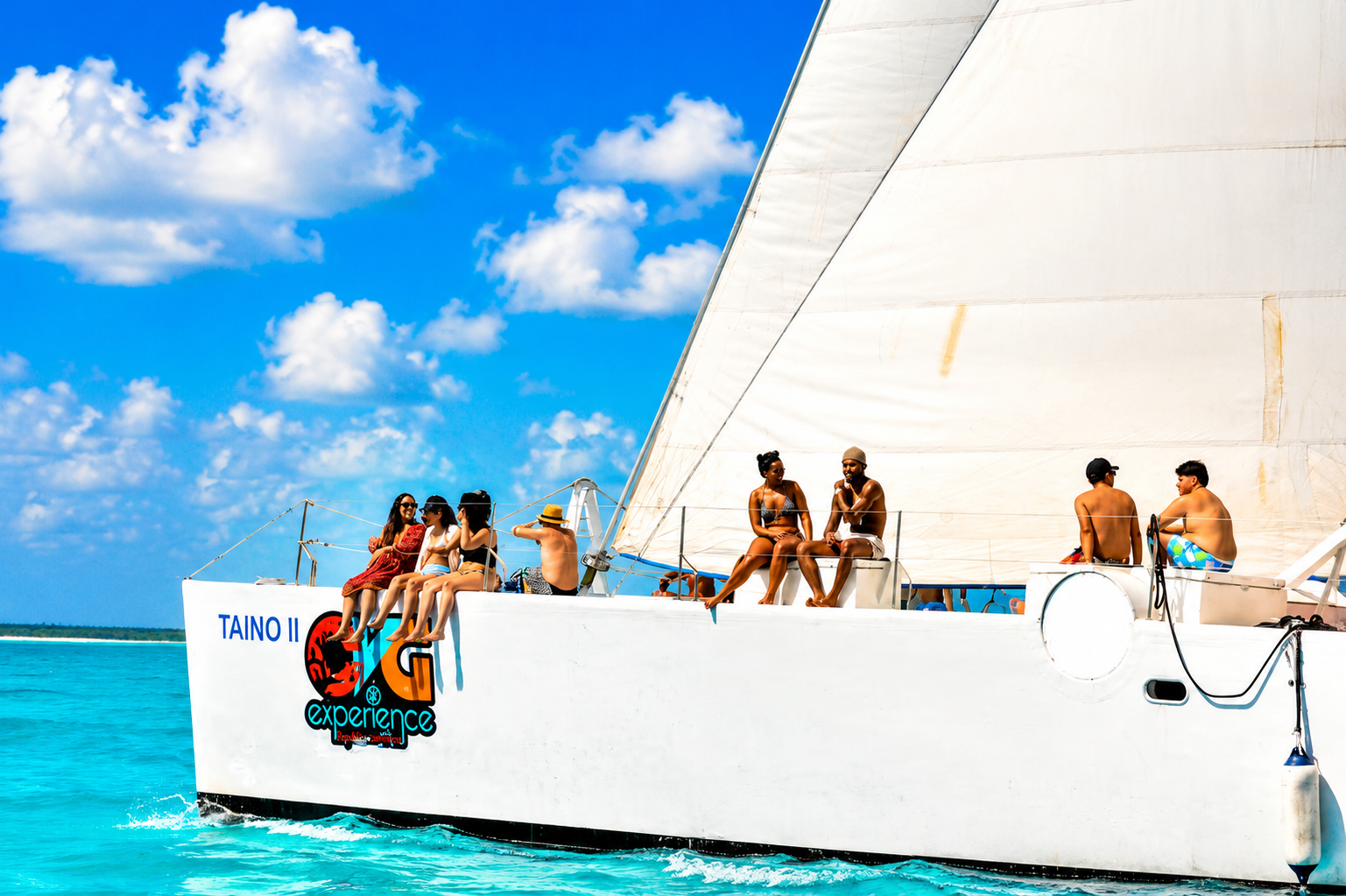
Discover the Dominican Republic’s top destination on this scenic island getaway featuring a party catamaran, beach time, and buffet lunch.
8 hours
Free Cancellation
Discover Caribbean paradise on this full-day excursion featuring white sand beaches, tropical buffet lunch, and open bar access.
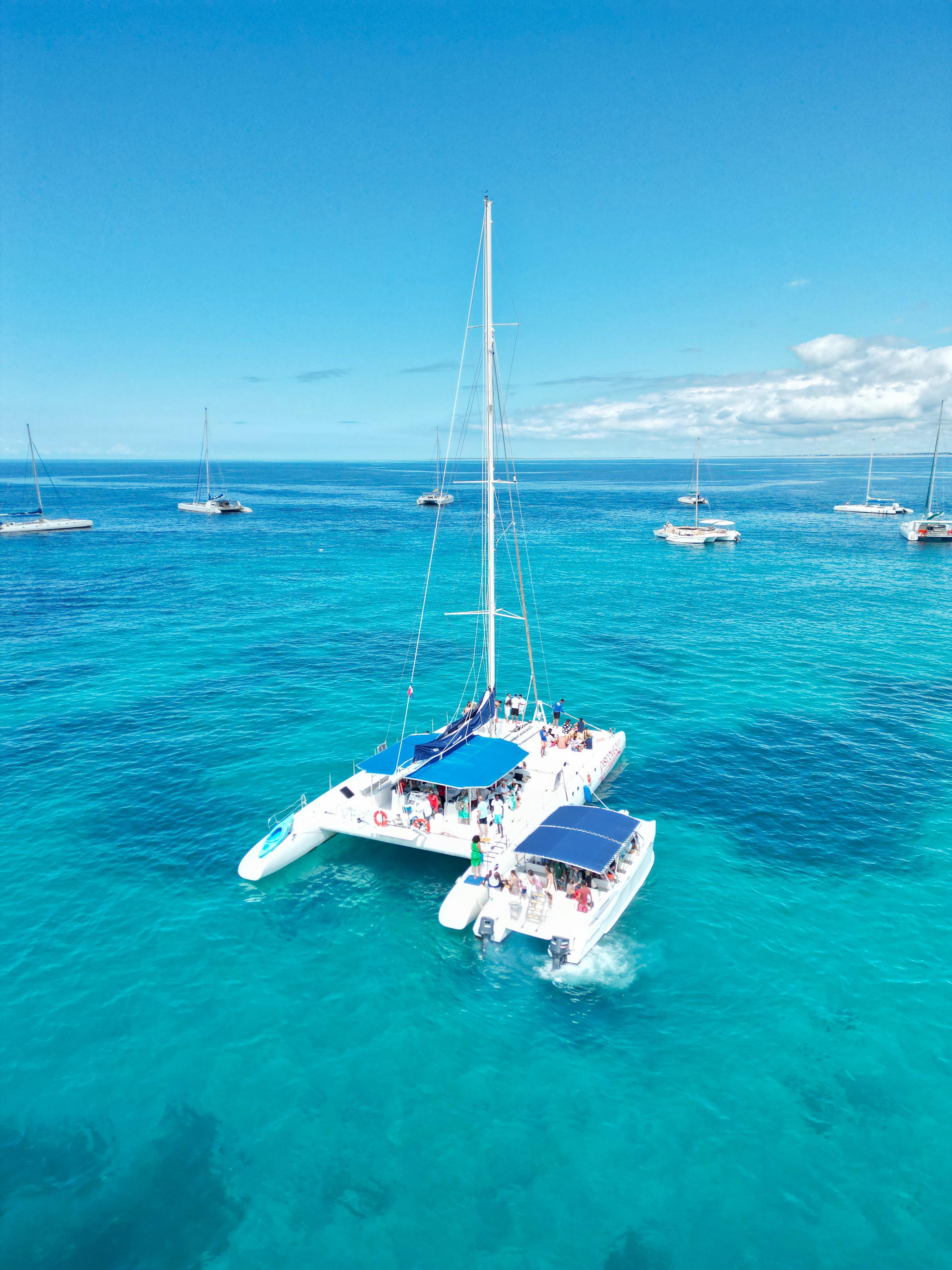
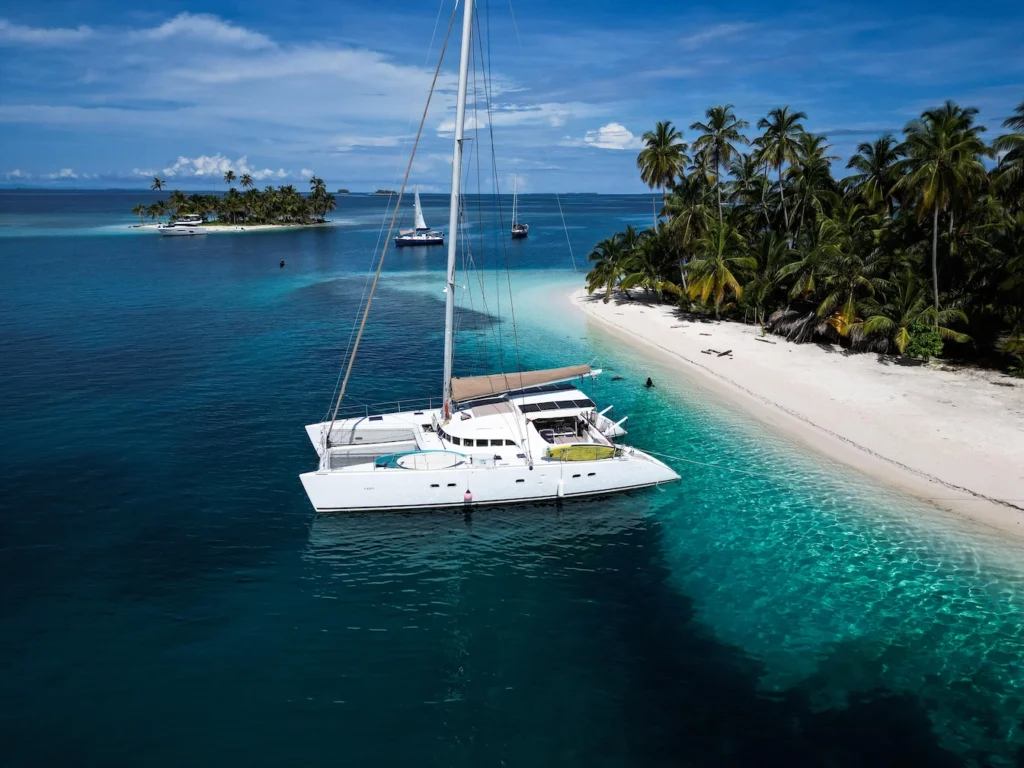
Board catamaran or speedboat and receive a life-jacket safety briefing before heading toward Parque Nacional Cotubanamá.
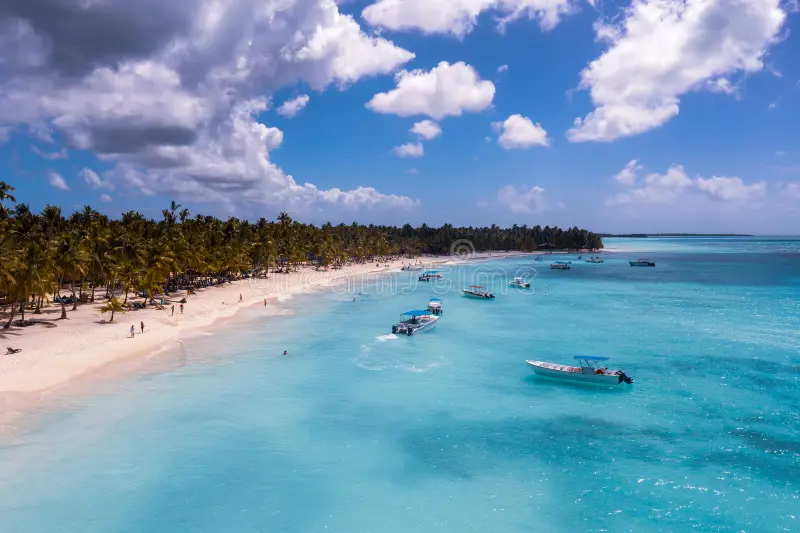
Boats pass rocky outcrops near Punta Espada before reaching a shallow beach for swimming and a first look at the coastline.
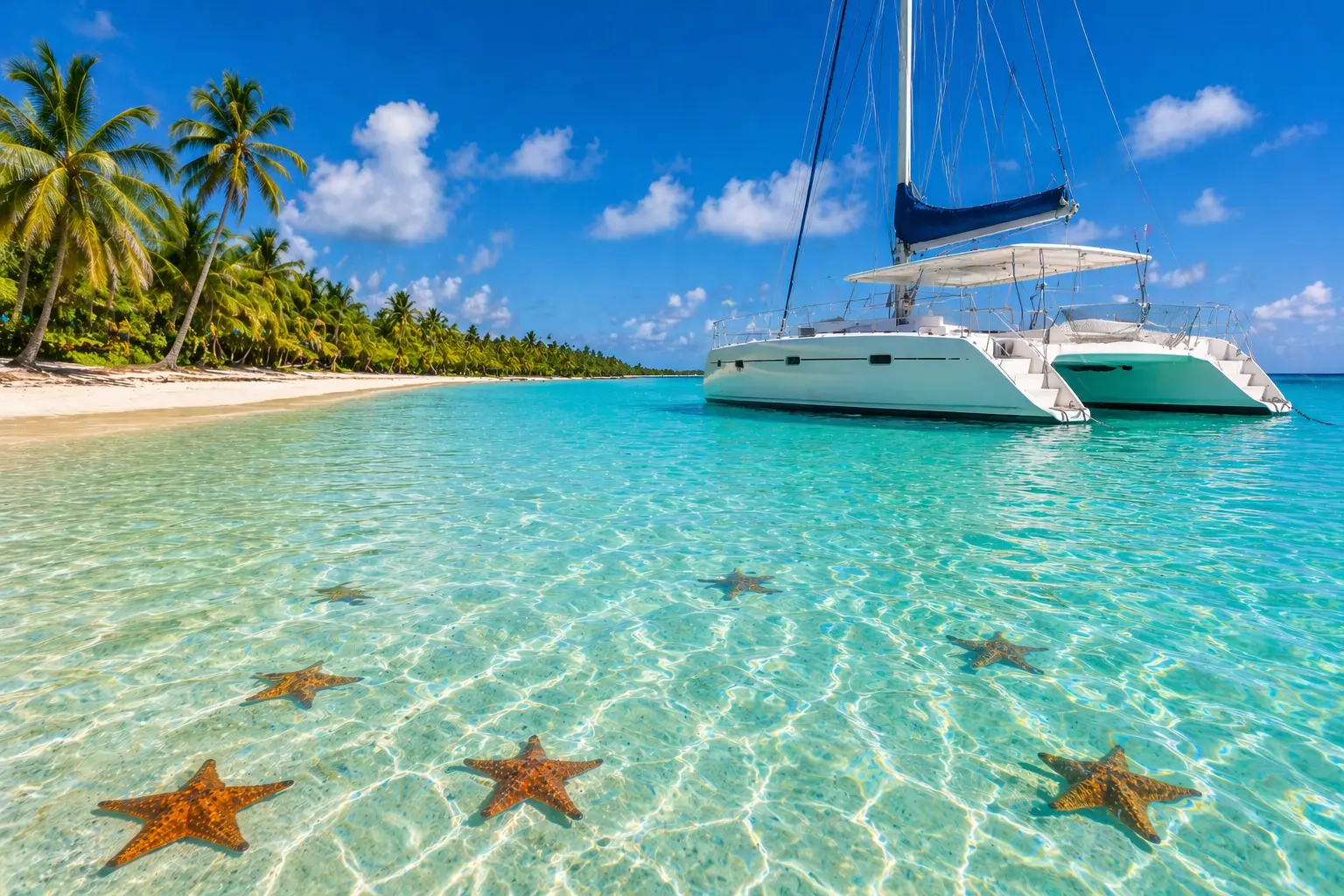
A shallow offshore sandbank where guides help guests spot large starfish in waist-deep water roughly one kilometer from shore.
A walk through the island's only fishing village, with small shops, a church, and a sea-turtle conservation stop.
A buffet lunch on the beach followed by free swimming or relaxing time before the return crossing.
Boats retrace the coastline back to the mainland pier, often passing the Catuano mangrove channel.
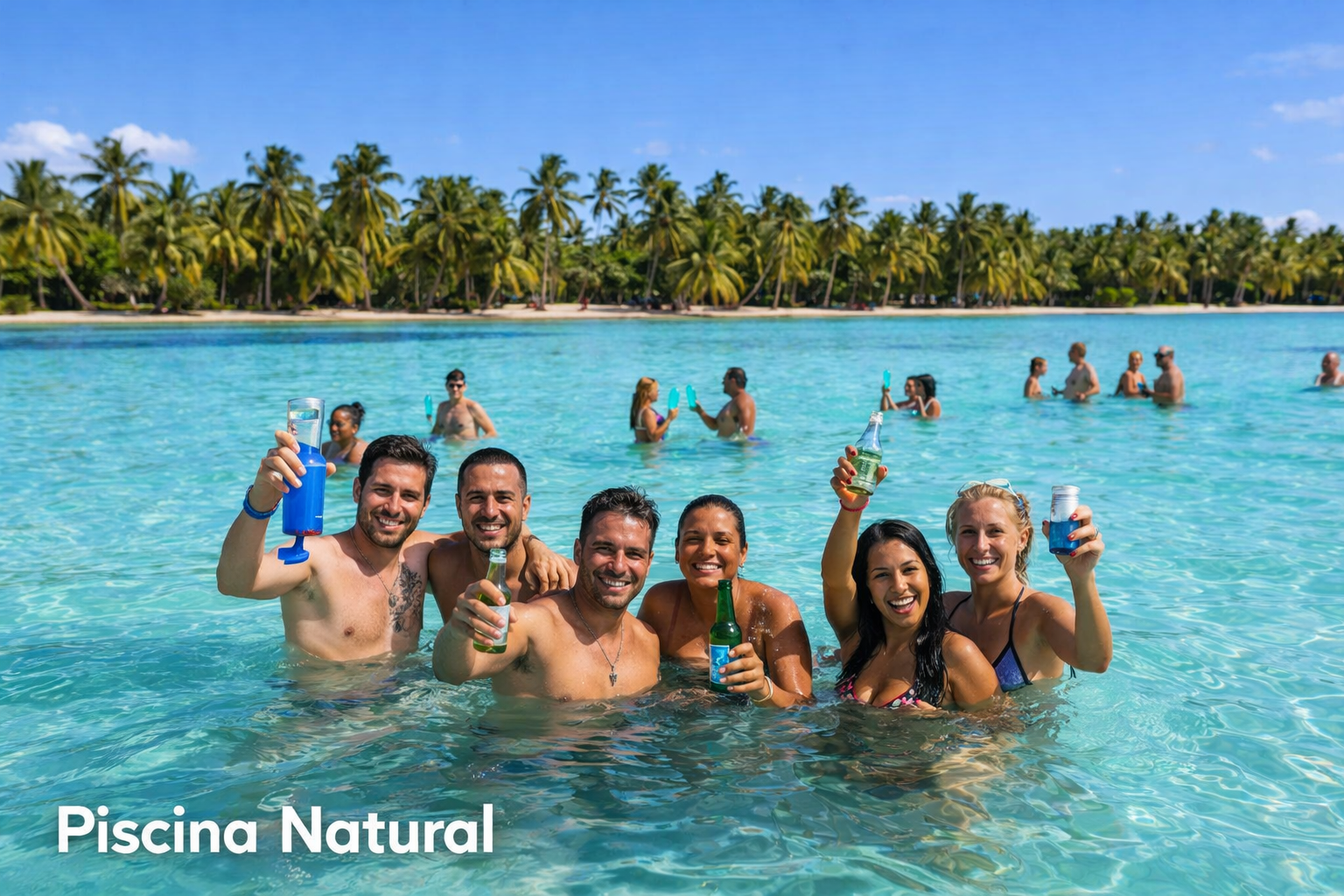
A shallow offshore sandbank roughly one kilometer from the coast where the seafloor rises to knee or waist depth, letting visitors stand in open ocean surrounded by large red starfish. Guides lift starfish briefly for photos before returning them to the grass beds below.
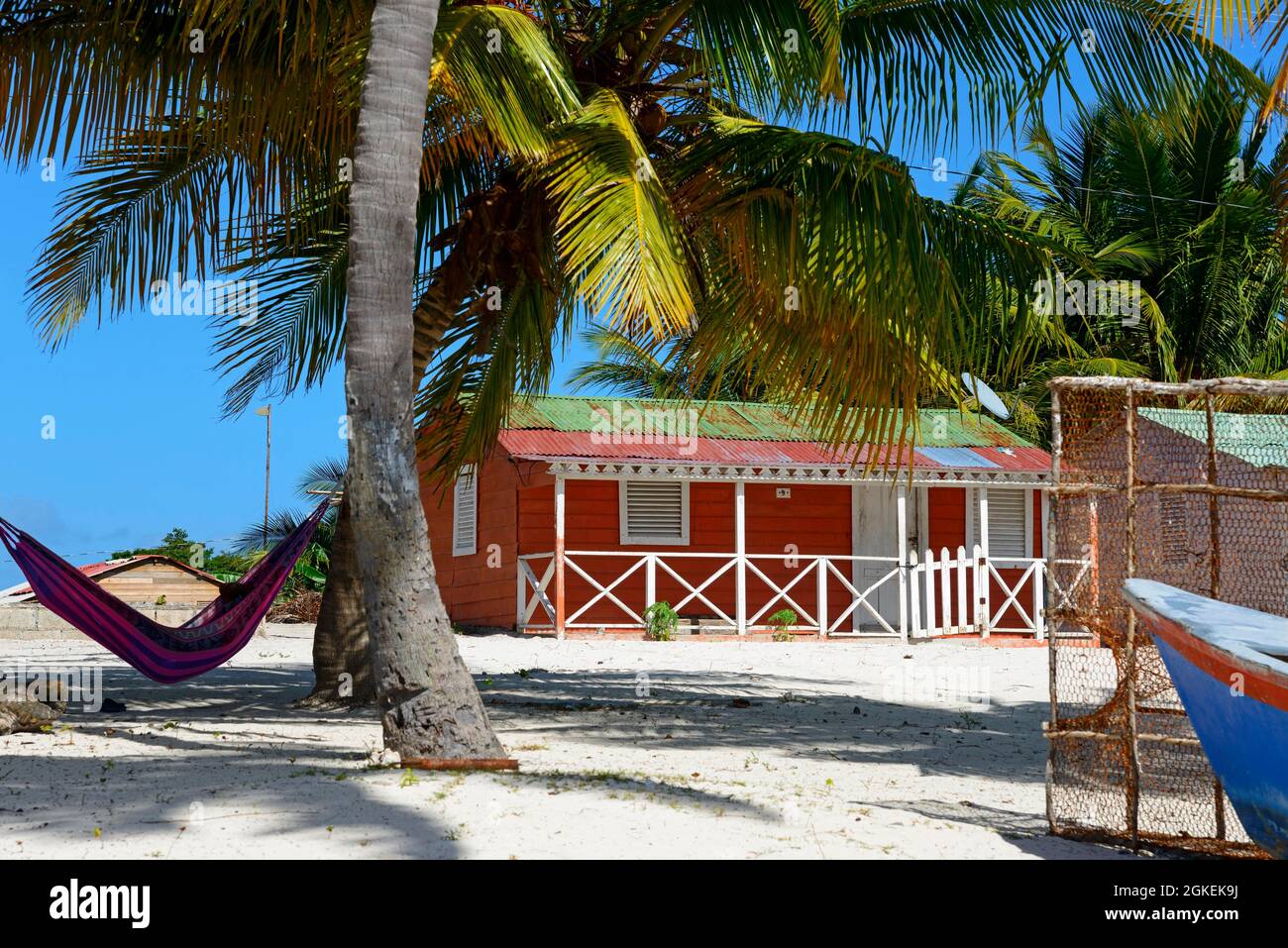
The only inhabited settlement on Isla Saona, a fishing village of colorful wooden houses without cars, where a small sea-turtle conservation project shelters hatchlings from island nests. Visitors can walk its single sandy lane and buy handmade souvenirs from local residents.
A narrow waterway separating Saona from the Dominican mainland, closed to all boat traffic since September 2013 to protect it as a nursery for reef fish. Tour boats travel alongside rather than through it, and passengers often spot juvenile fish schooling near the roots.
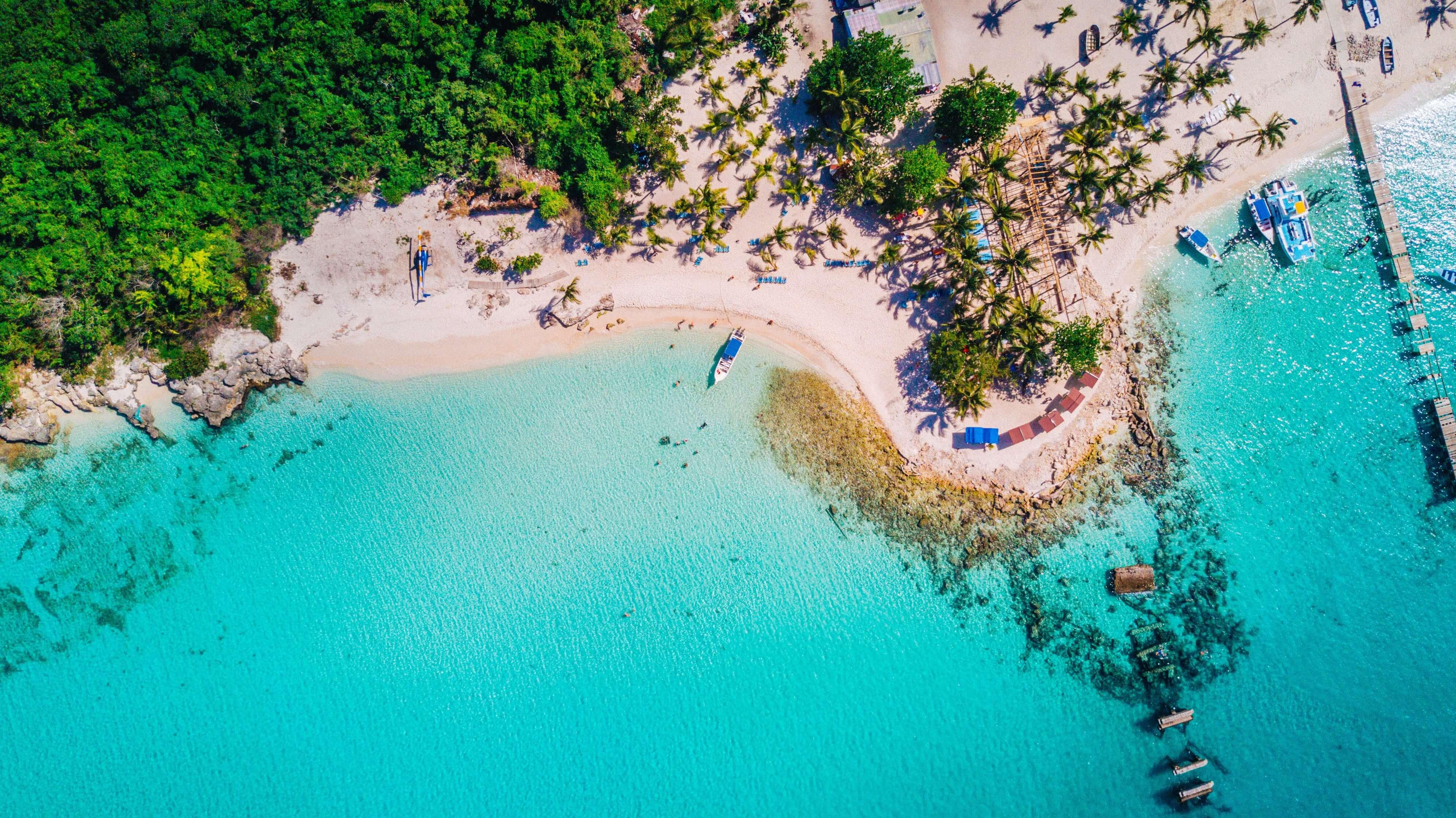
A calm, gently sloping stretch of white sand on Saona's northern coastline, commonly used as an early swimming and snorkeling stop before groups continue toward the natural pool. Shallow, current-free water makes it popular with less confident swimmers.
Limestone outcrops along the coastal route toward Saona where indigenous Taíno communities once lived centuries before European contact, now home to iguanas that can grow to roughly three feet long. Boats slow here for wildlife spotting on the way to the island.
A remote beach on Saona's less-visited stretch reached mainly by faster speedboat tours, offering open sand largely free of the crowds found at the island's main landing points. It is often the final stop before the return crossing to Bayahibe.
You reach Bayahibe early, and the harbour is already loud with engines and the smell of salt and diesel. You step onto a speedboat or a broad catamaran, fasten your life jacket, and push out past the marina toward open water. Spray comes over the bow as the mainland shrinks behind you and the Canal de Catuano opens ahead in bands of deepening blue. You stop first at the Piscina Natural, the offshore sandbar, where you climb down into water that reaches only your waist. You stand among starfish, feel the sun on your shoulders, and watch the catamaran crowd gather around a floating bar. Back aboard, you continue toward the island itself, and within the hour you step onto a beach lined with coconut palms leaning at the same tired angle. You walk the shoreline, wade through the shallows, and pause where the sand runs white against turquoise. You explore the edge of the dry forest, spot an iguana motionless in the shade, and rest under a palapa before the return. On the crossing back, many boats swap the speedboat for a slower catamaran, and you drift westward with merengue playing over the deck. A saona island dominican republic excursion ends the way it began, at the Bayahibe pier, sunburned and unhurried.
All the details about your upcoming adventure in one place
A saona island dominican republic excursion carries you from the mainland at Bayahibe across the turquoise Caribbean to a protected island within Cotubanamá National Park, where mangrove channels, coconut palms, and the shallow natural pool known as Piscina Natural define the landscape. Most saona island dominican republic excursion tours combine a catamaran leg with a speedboat return, giving travelers both a relaxed sail and a quick crossing over the reef-lined shallows. This isla saona boat trip suits anyone drawn to starfish sightings, warm lagoon swims, and the wide white-sand beaches of the Dominican south coast.
Isla Saona covers roughly 110 square kilometres yet holds no paved road, no airstrip, and only two small fishing villages, Mano Juan among them, where clapboard houses stand painted in flat Caribbean colours. The island sits at the southeastern tip of the Dominican Republic, inside Parque Nacional Cotubanamá, a protected reserve named for the Taíno chief who governed the region of Higüey before the Spanish arrival in the early sixteenth century. A saona island dominican republic excursion therefore crosses more than water; it crosses into one of the oldest documented indigenous landscapes in the Antilles. The park was established in 1975 and remains administered by the Ministerio de Medio Ambiente, which regulates boat traffic, mangrove access, and the sea-turtle nesting beaches that ring the eastern shore. Saona is the largest island belonging to the Dominican Republic, separated from the mainland by the Canal de Catuano, a shallow strait threaded with seagrass beds where manatees and nurse sharks feed. The famous natural pool, the Piscina Natural, is not a lagoon at all but a submerged sandbar a kilometre offshore, where the water stands waist-deep and starfish rest on pale sand. Why the place still matters is a question of ecology as much as scenery. The reserve shelters colonies of red-footed boobies, frigatebirds, and the rhinoceros iguana, while its dry forest of gumbo-limbo and sea grape represents a habitat vanishing across the wider Caribbean. Conservation fees folded into every excursión a isla saona fund ranger patrols and reef monitoring, which is where the true value of a ticket lies. A bayahibe saona island tour carries a modest cost that returns as protected coastline, and travellers weighing the price against a crowded mainland beach tend to find the balance clearly in Saona's favour. The architecture here is natural rather than built: coconut palms planted a century ago for copra, the low white lighthouse at Catuano, the weathered church at Mano Juan. Cinema lent the island a further layer of fame after scenes were filmed along its shores, and its beaches now appear on postcards worldwide. Yet the saona island dominican republic excursion remains defined less by celebrity than by scale, a stretch of sand and shallow turquoise that rewards patience over spectacle. Among Dominican Republic island landmarks, few combine legal protection, Taíno memory, and living reef so completely, which is why a well-chosen excursion reads as sound value rather than simple sightseeing, and why the reserve continues to draw travellers season after season.
A crossing to Saona is less sightseeing than passage into one of the oldest documented landscapes in the Antilles.
Swimwear under light, quick-dry clothing is standard for a Saona Island Dominican Republic excursion, since most of the day is spent on open boats and sandbanks. Bring a rash guard or cover-up for the boat ride, as breeze and spray make bare skin feel cooler than the tropical sun actually is. Footwear should be simple sandals or water shoes; nothing formal is worn on the island.
Operators provide a security briefing and life jackets before boats leave the Bayahibe pier, and everyone must wear one during the crossing. Valuables should stay in a sealed dry bag, since boats and the Piscina Natural sandbank involve direct saltwater exposure. Bag checks at departure are informal, focused mainly on confirming life-jacket compliance rather than screening contents.
Handheld cameras and phones are permitted throughout the trip, including in the water at the natural pool, but waterproof housing or a floating strap is strongly advised given the wading and boat spray involved. Drones require advance permission from the boat operator and are restricted near Mano Juan village and the mangrove channel to avoid disturbing wildlife. Flash photography of marine life such as starfish is discouraged by guides.
Children are welcome on most standard Saona Island Dominican Republic excursion boats, and infant-size life jackets are typically available on request. Family-specific pacing, nap timing, and stroller logistics are covered in the dedicated family-guide section.
Wheelchair users and travelers with mobility limitations should contact their tour operator in advance, since boarding is via ladder or shallow-water wading rather than a fixed dock ramp. There are no paved paths on Isla Saona itself, and the Piscina Natural stop requires standing in waist-to-knee-deep water. Life jackets are mandatory for all passengers regardless of swimming ability.
A buffet-style lunch — commonly grilled fish, chicken, rice, and salad — plus rum punch and soft drinks is included on the beach stop of most tours, but bringing your own alcohol onto the boat is generally not permitted. Bottled water is provided or sold on board; glass containers are prohibited on the boats and beaches. Extra snacks or specific dietary items should be brought in a sealed, spill-proof container.
Standard departure window
Midweek, lighter boat traffic
Busiest day, book early
Peak weekend crowds
Boat departures
Bayahibe pier, daily 07:00–18:00 window
Car · 90 min from Punta Cana, 2.5 hr from Santo Domingo · Free parking near the pier, gas cost only
Drive from Punta Cana or Santo Domingo directly to the Bayahibe pier parking area; roads are paved highway (DR-3 and local routes) the whole way.
Taxi · 90 min from Punta Cana · USD 80–150 one-way
Hotel-arranged taxis or private drivers run guests from resort zones straight to the Bayahibe pier without a tour bus transfer.
Public transport · 30–45 min from La Romana · Under USD 5
Guaguas (shared minibuses) connect La Romana to Bayahibe town, followed by a short walk or moto-taxi to the pier.
Most Saona Island Dominican Republic excursion operators allow free cancellation up to 24–48 hours before the scheduled boat departure, with a full refund minus any processing fee. Since there is no separate gate ticket — the Cotubanamá park fee (part of the 0 USD walk-up structure, bundled into the boat tour price) is included in what you pay the operator — refund terms are set entirely by the tour company rather than the park itself.
Recommended time
Full day (8-10 hours)
A typical saona island dominican republic excursion runs 8 to 10 hours door-to-door, though only 3 to 4 hours of that is spent actually ashore or in the water, since transfers, the boat crossing, and lunch fill the rest. Departures in the 08:00-10:00 window reach the Natural Pool before the 11:00-13:00 surge, when speedboats and catamarans from every operator converge at once and the sandbar gets genuinely packed. Add 30-45 minutes if your route also stops at Mano Juan village, and expect queues for the buffet line rather than for the beach itself. Choosing morning saona island dominican republic excursion tickets over midday slots is the single biggest lever on how crowded your day feels.
Crowd levels through the day
Weather · crowds · average price — dots go green to amber to red as each metric rises.
Dry season with the lowest rainfall chance and calmest seas, making crossings to Isla Saona smoother; this is also peak tourist season with the fullest boats.
Transitional shoulder season with warm temperatures around 28–31°C and occasional brief showers; crowds thin out compared to winter months.
Hot, humid summer with afternoon thunderstorm risk typical of the Caribbean rainy season; mornings stay clearer, so early boats are more reliable.
Peak Atlantic hurricane season with the highest chance of tour cancellations or rescheduling due to storms; this is the quietest and least crowded stretch of the year.
Confirm the tour includes park-fee bundling and life jackets, since informal beach vendors in Bayahibe may not include insurance or safety equipment.
Mano Juan village shops and drink stalls rarely accept cards, so keep small USD, EUR, or DOP bills on hand.
A sealed dry bag keeps phones, passports, and cash safe during wading stops at the Piscina Natural sandbank.
Tours between September and November are more prone to weather cancellation, so build a buffer day into travel plans.
Standard sunscreen is restricted or discouraged near the natural pool and reef areas to protect marine life.
The Catuano channel has been closed to boat traffic since 2013 to protect it as a fish nursery, so tours travel alongside rather than through it.
Bayahibe, La Altagracia Province, Dominican Republic
Primary boarding point for nearly all Saona Island Dominican Republic excursion tours; arrive 15–30 minutes before departure.
Get directionsPunta Cana and Bávaro resort area
Shuttle buses collect guests roughly 90 minutes before boat departure for transfer to Bayahibe.
Get directionsLong before the first boat left Bayahibe, the Taíno peoples inhabited this limestone island they called Adamanay. Archaeological evidence of their occupation survives in the caves of the surrounding national park. In September 1494, Christopher Columbus reached the island during his second voyage. He named it Savona, after Savona in Liguria, honouring the Genoese navigator Michele da Cuneo who sailed with him. Over centuries the Spanish spelling drifted, and Savona became Saona. Any modern saona island dominican republic excursion still carries that Ligurian echo in its name. The fishing settlement of Mano Juan anchors the island's human story. Founded in the early twentieth century as a small pesquero, it remains the only permanent village, its rows of painted wooden cottages sheltering a few hundred residents. Its calm was interrupted in 1998, when Hurricane Georges struck the region and forced extensive rebuilding across the eastern coast. Conservation reshaped the island's future in 1975, when the Dominican state created Parque Nacional del Este, later renamed Parque Nacional Cotubanamá after the Taíno chief who resisted the Spanish. The designation folded Saona into a protected reserve, restricting development and framing every dominican republic island tour as passage through a national park. Visitors who book saona island dominican republic excursion tickets pay a Cotubanamá fee bundled into the boat price rather than at any gate. At Mano Juan, a modest turtle sanctuary now protects nesting hawksbill and green turtles, whose eggs are gathered and hatched before release. Operators running a saona island dominican republic excursion tour route guests past this work, and the broader network of saona island dominican republic excursion tours channels tourist attention toward the reserve's mangroves, seagrass beds, and Taíno heritage sites. The island's story is one of settlement, naming, near-disaster, and protection — layers that still surface for anyone stepping ashore among the Dominican landmarks of La Altagracia.
Taíno peoples settled the island they called Adamanay, leaving cave sites across the region.
Columbus reached the island and named it Savona after Michele da Cuneo's Ligurian home.
The fishing village of Mano Juan was founded as the island's only permanent settlement.
The state created Parque Nacional del Este, placing Saona under protection.
Hurricane Georges struck the eastern coast, forcing rebuilding at Mano Juan.
A turtle sanctuary at Mano Juan began protecting hawksbill and green turtle nests.
The reserve was renamed Parque Nacional Cotubanamá for the Taíno chief.
This waist-deep offshore sandbar between Bayahibe and Isla Saona is the signature shot of any saona island dominican republic excursion — turquoise water stretching to the horizon with starfish visible underfoot. Stand a few meters from the anchored boat for a clean horizon line, holding the camera low to exaggerate the shallow expanse.
Rows of brightly painted wooden houses along the sandy main street give this fishing hamlet its postcard look, best framed straight down the lane with a house facade filling one side. It doubles as the access point for Saona's turtle sanctuary, where hatchlings and nesting information boards make a good secondary subject.
The shaded rehabilitation pools hold rescued hawksbill and green sea turtles at close range, ideal for tight shots through the low fencing without flash. Ask staff before photographing any release event, since timing depends on nesting season.
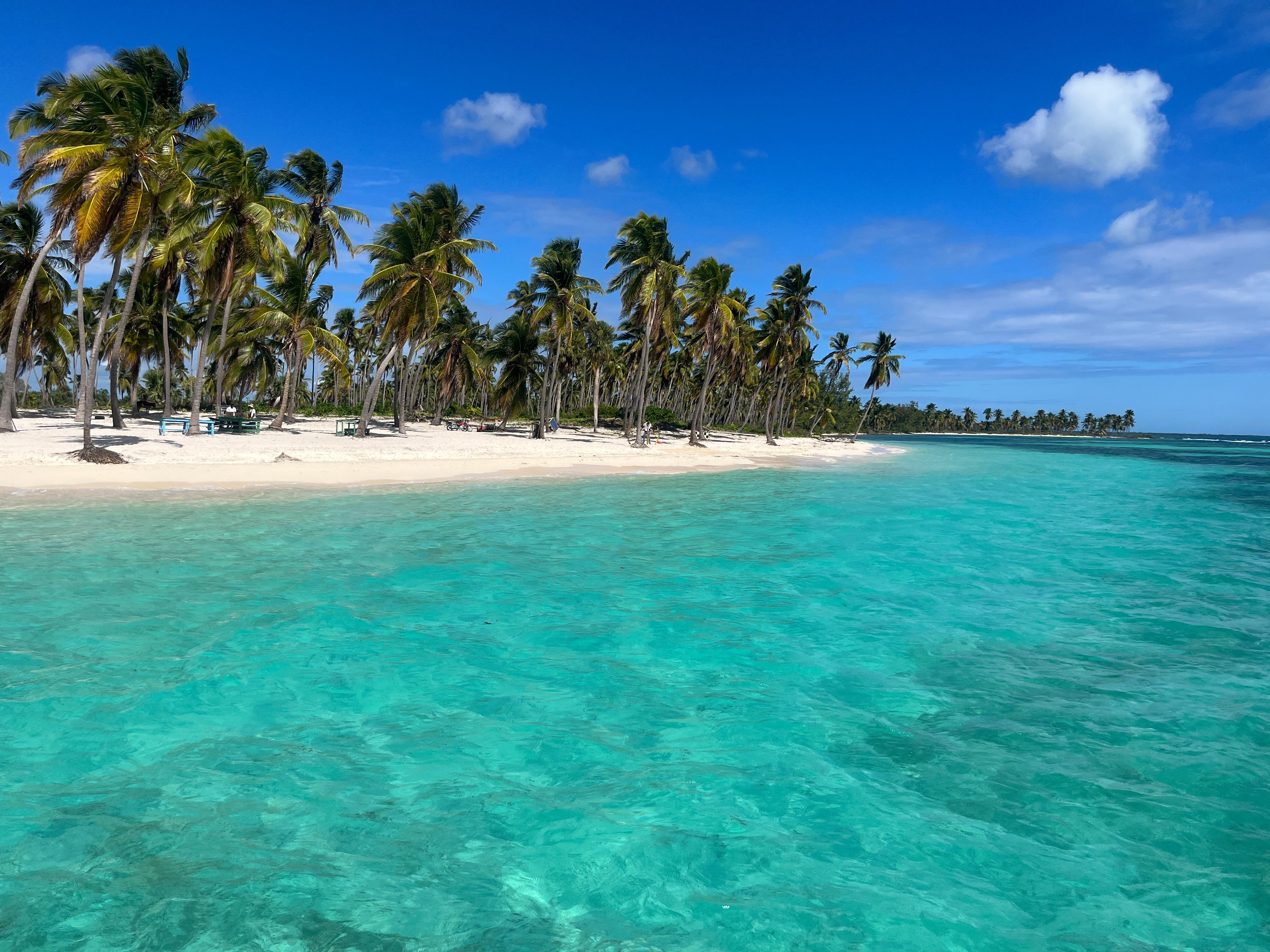
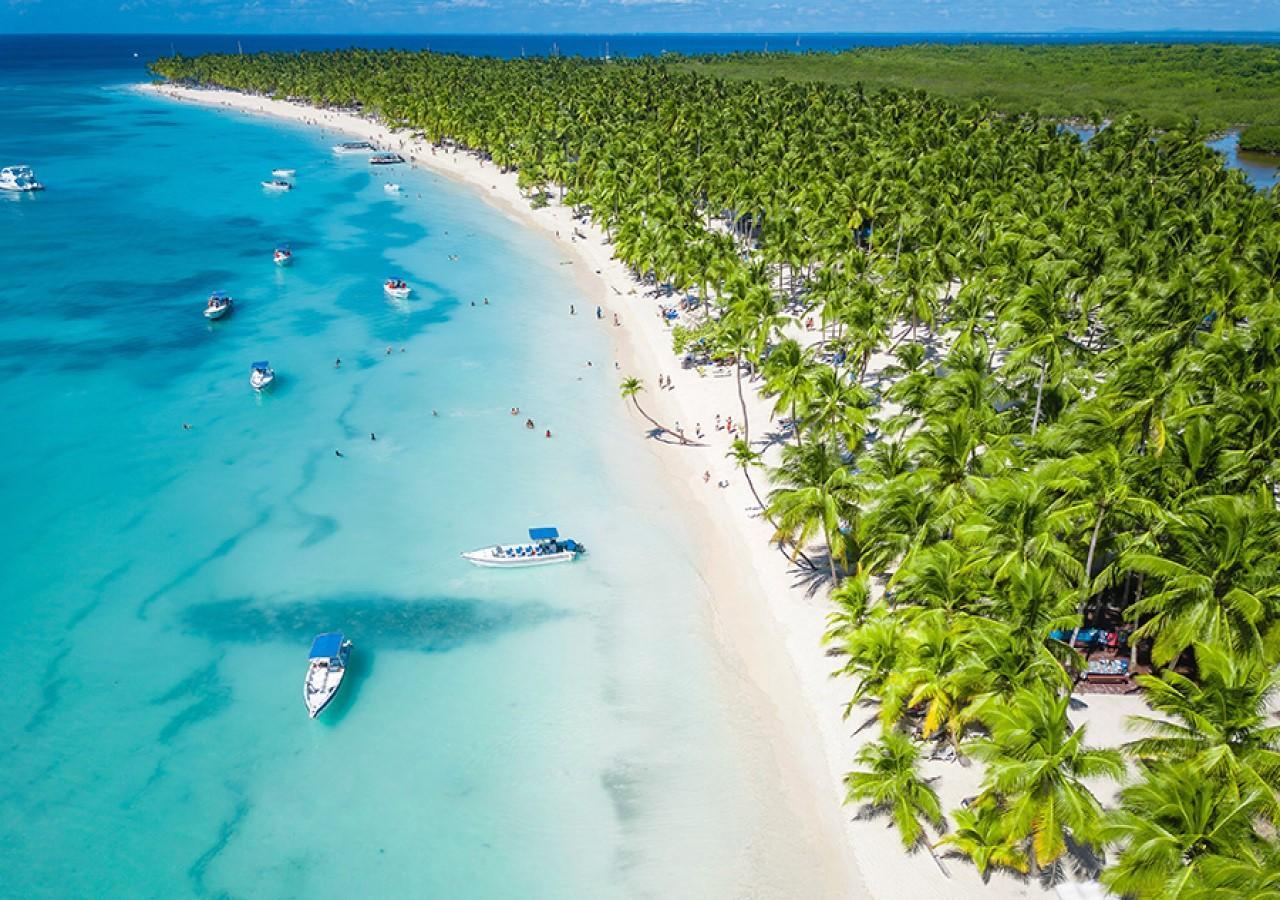
This remote western beach is reachable only by small boat, and its long run of leaning coconut palms against white-pink sand and reef-clear water is the least crowded frame on the island. Walk to the tree line and shoot back toward the water for the classic curved-palm silhouette.
The open-water crossing from Bayahibe gives a wide vantage of the island's low green coastline and passing catamarans, shot from the bow or upper deck as the shoreline first comes into view. Salt spray is common, so a lens cloth or waterproof housing helps.
A saona island dominican republic excursion means a long day of boat travel, sun, and open water, so most of the planning is about pacing rather than logistics on the island itself. Families who bring shade, snacks, and a flexible attitude tend to do best, since there's no stroller-friendly infrastructure once you're off the boat.
The speedboat crossing bounces more than the catamaran, so choose the catamaran option if you have a toddler or a child prone to motion sickness, and sit toward the center where the ride is smoother.
Grade-school kids and up generally handle the full day best; toddlers can come but need naps and diaper changes worked around a boat schedule, and most operators discourage infants under 1-2 years on the speedboat leg.
The sandbar stop is shallow and calm, often around waist to knee height for adults, which makes it one of the easier water moments for young children to stand and play safely under close supervision.
Leave the stroller behind; sand, boat boarding, and no paved paths on Saona make a carrier or simply carrying young children far more practical for this saona island Dominican Republic excursion tour.
Shade is limited to scattered palms and any tent your operator sets up, so pack a wide-brim hat, reef-safe sunscreen, and a light cover-up for kids to avoid a mid-afternoon meltdown.
With a full day split across bus, boat, beach, and return travel, build in downtime rather than activities, and expect younger kids to tire by mid-afternoon well before the return trip.
Food on Isla Saona is built around one included buffet, so most of any saona island dominican republic excursion tour needs no separate food budget beyond drinks or a snack in Mano Juan; those wanting a sit-down meal before or after the boat should look to Bayahibe's harbor-front strip.
Grilled chicken, rice and beans, salads and tropical fruit are laid out under a shaded pavilion near the main beach, with an open bar of rum, beer and soda; it's the busiest stop between 12:30 and 14:00, so arriving right at opening avoids the line.
Run by Italian-Dominican owners in the fishing village, it's known for fried fish and chicken and beans and gets a steady trickle of visitors on saona island dominican republic excursion tours that include a Mano Juan stop; good for a relaxed plate away from the buffet crowds.
A second beachfront option in the village serving fresh fried fish and Dominican staples, useful as a fallback when Saona Paradise fills up during midday tour arrivals.
Small stands along the village lanes sell fruit, cold drinks and light snacks, best for a quick bite while browsing the craft stalls rather than a full meal.
A popular harbor-area spot for seafood and sunset cocktails, well suited to dinner the evening after a saona island dominican republic excursion or a relaxed breakfast before an early boat departure.
Real experiences from real travelers
The saona island dominican republic excursion took us out to that natural pool in the middle of the sea and the water was barely chest-deep and bath-warm. We went mid-morning before the crowds thickened and could actually see starfish resting on the sand below us. Bring reef-safe sunscreen because there is zero shade out there.
Loved that the trip mixed a fast speedboat out and a slow catamaran back with merengue playing. The isla saona excursion crosses part of Cotubanama National Park and the mangrove channel was calmer and greener than I expected. Sit toward the back of the speedboat if you get seasick easily.
It is a full day and the road transfer to the boat launch is longer than the brochure suggests, so pace your energy. Once we reached the beach the sand was powder-soft and the shallows went out forever. A saona island dominican republic excursion tour is better if you request an earlier departure to beat the midday heat.
The leaning palms along the Saona shoreline looked exactly like the postcards, and by late afternoon the light turned gold across the water. Our guide pointed out the sea turtle sanctuary at Mano Juan which most people skip. Water shoes helped near the rockier entry points.
Booked saona island dominican republic excursion tickets for a July trip and the visibility in the shallow lagoon was remarkable even at midday. The catamaran leg was crowded but the beach itself spread everyone out. Keep your phone in a dry bag because the boat spray reaches the seats.
Standing in the middle of the ocean at that sandbar with turquoise water in every direction was the moment that stuck with me. The isla saona day trip crosses open Caribbean water so expect some bounce on the way out. Go early in the week if you can, weekends felt busier.
The beach on Saona is genuinely gorgeous with fine white sand and steady trade winds, though several boats arrive around the same time. We found a quieter stretch by walking a few minutes past the main landing. Comparing saona island dominican republic excursion tours, the smaller-group operators seemed to give more time in the water.
The starfish in the shallow flats were the size of my hand and easy to spot in the clear water. Our saona island dominican republic excursion tour included stops at both the natural pool and the palm beach, which felt like good use of the day. A rash guard saved me from the strong afternoon sun.
Isla Saona sits inside Cotubanama National Park and you can feel the protected, wild feel of it once you land. The trade winds kept things comfortable even under the strong sun. Wide-brim hats and a refillable water bottle made the long day easier.
The famous natural swimming pool offshore was the standout, warm and shallow with sailboats anchored around us. The crossing through the mangrove edge of the park was scenic and calm. If you want a saona island dominican republic excursion, aim for a clear-weather day since wind can shorten the boat time.
Everything you need to know for your journey
Bayahibe departure operations run within the daily 07:00–18:00 window, with most Saona Island Dominican Republic excursion tours boarding boats between 08:00 and 09:00 for the best sea conditions.
There is no separate walk-up gate fee for Isla Saona; the Cotubanamá national park fee of 0 USD out-of-pocket is bundled directly into the price of the boat tour itself.
Accessibility is limited, since boarding involves ladders or shallow wading rather than a paved ramp, and Isla Saona has no paved paths once you land.
Glass bottles, coolers, spearfishing gear, and personal alcohol are typically not allowed aboard Saona Island Dominican Republic excursion boats; drones also need advance operator permission.
Arriving with an 08:00–10:00 morning departure from Bayahibe gives calmer seas and fewer crowds, and the December–April dry season generally sees the busiest boats overall.
Lightweight swimwear with a cover-up and water shoes is the practical standard, since the day mixes boat rides, beach time, and wading at the natural pool.
Most Saona Island Dominican Republic excursion tickets include a beach lunch with grilled fish or chicken, rice, salad, rum punch, and soft drinks.
Bayahibe port is reachable by car or taxi from Punta Cana (about 90 minutes) or Santo Domingo (about 2.5 hours), with hotel shuttle pickups commonly arranged in advance.
Yes, children are welcome on most standard tours, and infant life jackets are usually available on request from the operator.
Cancellations made 24–48 hours before departure typically receive a full refund, though exact terms vary by the specific tour operator booked.
A Saona Island day trip pairs naturally with time at Bayahibe Beach or a short walk to the village's small wooden church before or after the boat departs.
Yes, handheld cameras and phones are permitted at the Piscina Natural sandbank, though a waterproof case is recommended given the wading involved.
The main departure beach itself, popular for swimming and snorkeling while waiting for a Saona-bound boat.
A small, brightly painted wooden fishing-village church that predates most tourism development in the area.
A long resort-lined beach adjacent to Bayahibe, popular for water sports before or after a Saona trip.
A protected mangrove channel separating Saona from the mainland, closed to boat traffic since 2013 and used as a marine nursery.
Small hotels and guesthouses clustered near the port, convenient for early boat departures.
An all-inclusive beachfront resort near Bayahibe frequently used as a pickup point for Saona tours.
A budget-friendly all-inclusive option within easy walking distance of the boat departure point.
Join thousands of happy travelers who have discovered this incredible experience
Book Your Experience Now