8 hr
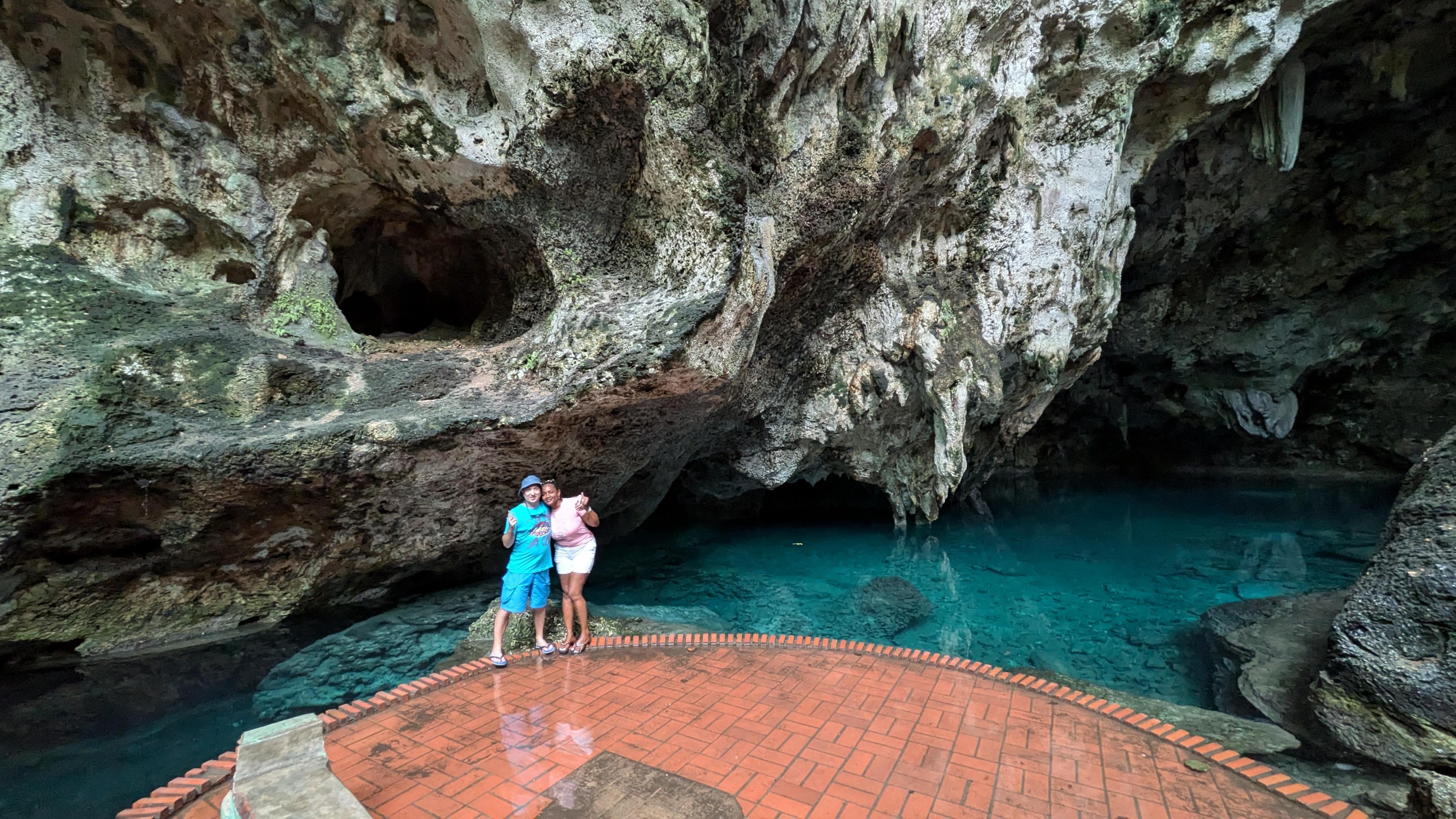
Santo Domingo Full-Day Highlights: Caves, Lighthouse, and Beaches
- Expert local guide
- Small group
- Skip-the-line access
- Free cancellation
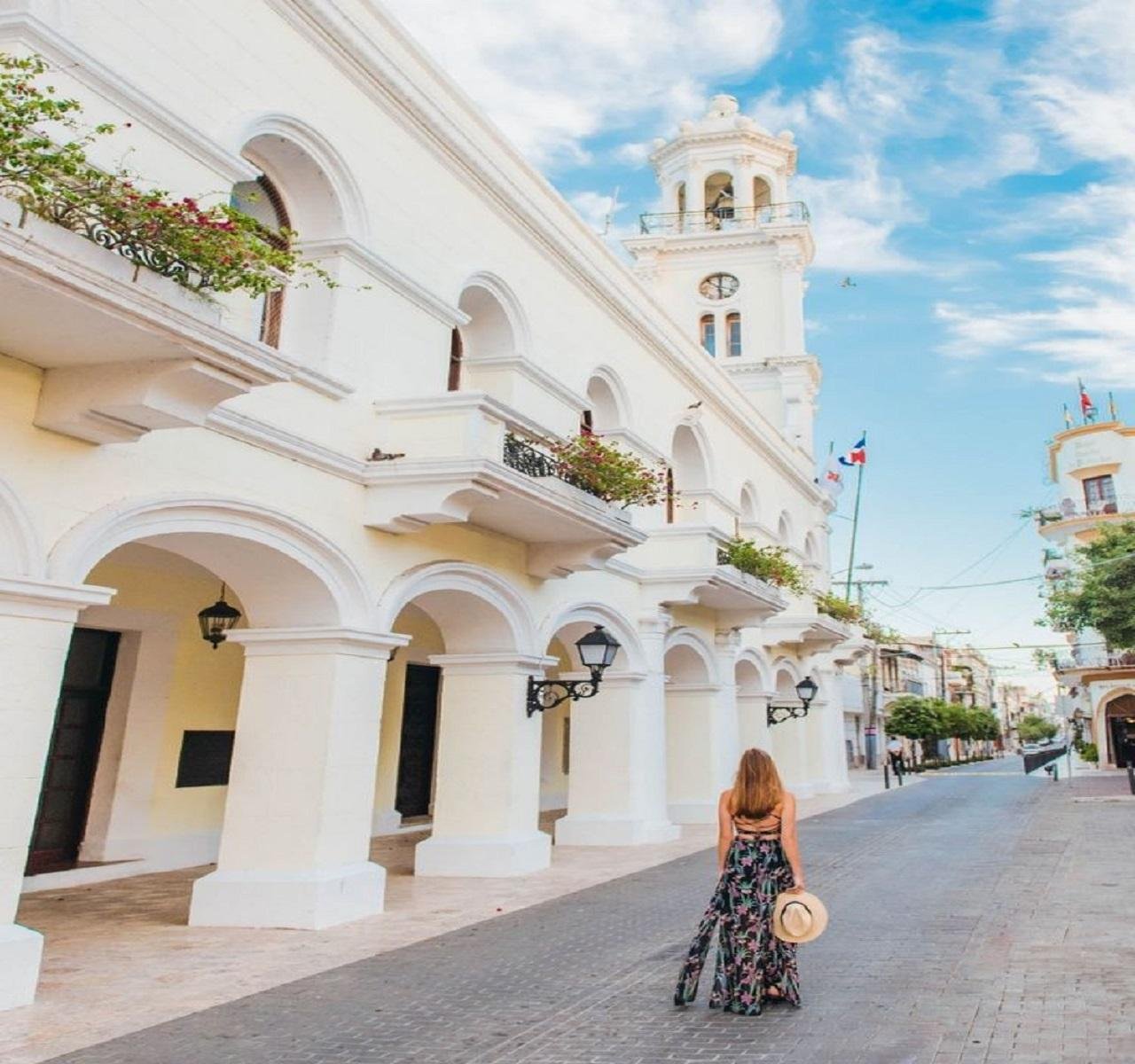
Santo Domingo Day Trip — Zona Colonial & Catedral Primada
Coral limestone at first light, Caribbean shade by noon.
Compare fares, pick the fit — all bookings are mobile-voucher and eligible for free cancellation where shown.
8 hr
12 hr 30 min
9 hr
Worth it for history-minded first-timers
At 60 DOP, a santo domingo day trip to the Catedral Primada de America is close to free by any measure, and the interior pays that back many times over. You walk into the oldest cathedral in the Americas, a coral-limestone Gothic and Renaissance hybrid with vaulted chapels and colonial-era religious art that anchors the whole Zona Colonial. The 60 DOP buys adult entry without the audio guide; skip the guide upsell unless you want the deeper backstory, since the space reads clearly on its own. This santo domingo cathedral tour makes most sense bundled with the surrounding UNESCO-listed Zona Colonial landmarks, not as a standalone stop. It pays off for anyone who values architecture, faith heritage, or first-in-the-New-World milestones. Casual beachgoers indifferent to old stone will get less from it. Weighed against the ticket price, the value tilts firmly positive.
Bottom line: For a few pesos, this santo domingo day trip tickets purchase is among the best-value stops in the Zona Colonial.
Hand-picked experiences loved by thousands of travelers
9 hours
Free Cancellation
Experience the heart of Dominican history on a guided day trip featuring the Colonial Zone, cenotes, and local cuisine.
8 hours
Free Cancellation
Uncover the history of the oldest city in the Americas on this comprehensive guided day trip from Punta Cana.
12 hours
Free Cancellation
Explore the history of the New World's first city on this comprehensive guided day tour from Miches.
Orient yourself at the square facing the cathedral's main facade before entering.
Pass the visual bag check and pay the 60 DOP entry fee at the door.
Move slowly along the Gothic vaulted aisles, viewing the choir stalls and side altars.
Stop at the main altar area, noting the mix of Gothic, Renaissance, and Baroque detailing.
Step into the quieter cloister space adjoining the main structure.
Continue on foot toward the Alcázar de Colón and Plaza de España.
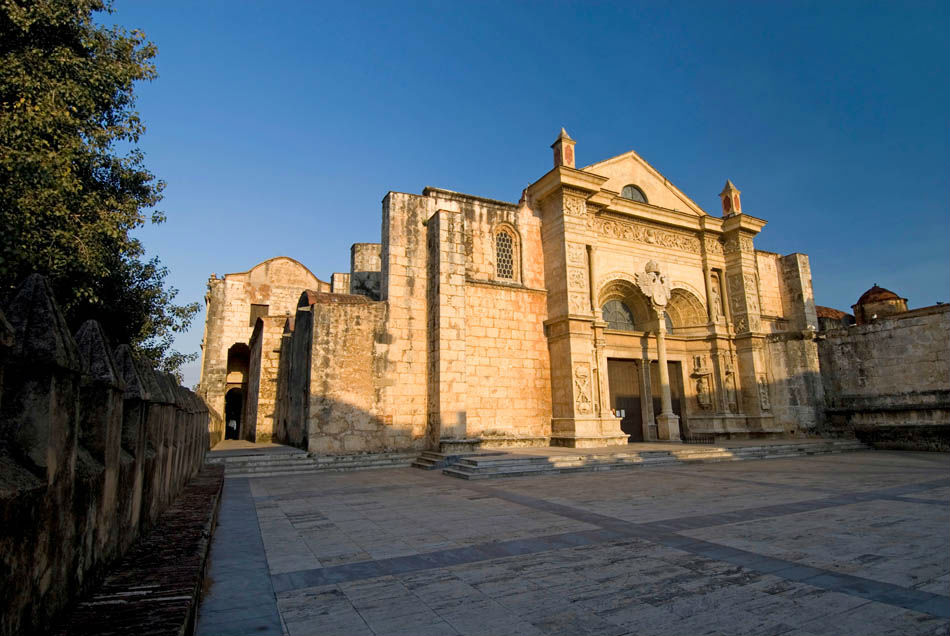
The cathedral's principal entrance blends Gothic ribbing with later Baroque ornamentation added over the building's three-decade construction period starting in 1512. Weathering from five centuries of tropical storms and past earthquakes is visible in the coral limestone blocks.
The main altar area displays a mix of Gothic and Renaissance detailing crafted during the cathedral's original consecration in 1541. Its ornamentation reflects decades of work by artisans brought from Spain and other colonial territories.
The central nave rises under ribbed Gothic vaulting supported by stone columns that have withstood pirate raids and seismic activity since the 16th century. Its cool stone interior stands in sharp contrast to the tropical heat outside.
Carved wooden choir stalls line a section of the nave, used historically during clergy services and still functional today during the cathedral's regular Sunday mass. The woodwork reflects Spanish colonial craftsmanship traditions.
Multiple side chapels branch off the main nave, several containing tombs and mausoleums including that of early cathedral clergy who died before construction was completed in 1541. Each chapel carries distinct stone or wood detailing from different construction phases.
An adjoining cloister offers a quieter, shaded courtyard space separate from the main tourist flow through the nave. It reflects the traditional Spanish colonial layout built around a central open-air court.
You arrive at the Catedral Primada de America between 08:30 and 10:30, when the coral stone is still cool and the tour groups have not yet filled Parque Colón. You pay the 60 DOP adult entry and step from the July glare into a nave that drops the temperature by several degrees at once. Inside, you follow the rib-vaulted ceiling with your eyes, then move slowly past the fourteen side chapels, pausing at the treasury and the carved mahogany choir. You trace the plateresque façade back outside, where shoe-shine chairs and café tables ring the square. This part of a santo domingo day trip rewards an unhurried pace. From Parque Colón you walk east along Calle Las Damas, the oldest paved street in the Americas. You reach the Fortaleza Ozama, climb the Torre del Homenaje, and look out over the Ozama River mouth. You double back to the Alcázar de Colón, cross the plaza to the ruins of Hospital San Nicolás de Bari, and let the laurel shade carry you through the midday heat. By late afternoon you are back near the cathedral bells, a full circuit of the Zona Colonial behind you, five centuries covered on foot.
All the details about your upcoming adventure in one place
A santo domingo day trip brings you into the Zona Colonial, the oldest permanent European settlement in the Americas and a UNESCO World Heritage site laid out along cobblestone streets. Guided santo domingo day trip tours typically weave through the Calle Las Damas, the Alcázar de Colón, and the Catedral Primada de América while a local guide shares the story behind each 16th-century landmark. Most Colonial Zone excursions pair walking time with a relaxed lunch, making the historic core easy to explore in a single day.
The Catedral Primada de America, built between 1512 and 1540, is the oldest cathedral still standing in the Americas — its cornerstone laid barely two decades after Columbus first landed on the island. Its coral limestone walls anchor the western edge of the Zona Colonial, the first permanent European settlement in the New World and a UNESCO World Heritage Site since 1990. A santo domingo day trip pulls a visitor into a city that predates every other colonial capital in the hemisphere. Arzobispo Merino Street, where the cathedral fronts Parque Colón, follows a grid surveyed in 1502 by Nicolás de Ovando — the same rectilinear plan later exported to Havana, Cartagena, and Lima. Walking the Zona Colonial is walking a template that shaped half a continent. The cathedral itself is a study in transition. Begun in late Gothic and finished in early Renaissance, it carries a rib-vaulted nave, a façade of Spanish plateresque carving, and fourteen side chapels once hung with silver. For nearly four centuries a marble tomb inside claimed to hold the remains of Christopher Columbus, until the dispute with Seville over his true resting place turned the question into one of the longer-running debates in Atlantic history. The mahogany choir, the treasury, and the buttressed golden-hued stone reward slow attention. Beyond the cathedral, the santo domingo landmarks cluster within a few walkable blocks: the Alcázar de Colón, the ruins of the Hospital San Nicolás de Bari, the Fortaleza Ozama with its Torre del Homenaje looking out over the river mouth, and the Calle Las Damas, the oldest paved street in the Americas. Together they form the densest concentration of early-sixteenth-century architecture anywhere in the Western Hemisphere. This density is what makes santo domingo day trip tours more than a single monument. The Zona Colonial reads as a continuous document — Ovando's grid, Diego Colón's viceregal palace, Franciscan and Dominican convents, and defensive walls that once faced Drake's raiders in 1586. A santo domingo excursion moves through five centuries in an afternoon, from Taíno foundations beneath the streets to the plazas where Dominican independence was declared in 1844. The cathedral remains an active place of worship, its bells still marking the hours over Parque Colón. Around it, café tables, shoe-shine chairs, and the shade of laurel trees keep the plaza in motion. Visitors come for the stone and stay for the living city that has grown around it — a heritage core still inhabited, still Catholic, still Caribbean, and still, five centuries on, the beating heart of the capital.
A city that predates every other colonial capital in the hemisphere, mapped on a grid that shaped half a continent.
Shoulders and knees must be covered to enter the Catedral Primada de America; shorts, tank tops, and above-knee skirts are turned away at the door. Staff keep shawls and wraps on hand to loan visitors who show up underdressed, so a light scarf packed in advance saves the wait.
Backpacks and large bags are subject to a visual check at the Arzobispo Merino Street entrance before you're allowed inside the nave. There's no bag storage on site, so groups arriving on a santo domingo day trip tour typically leave bulky luggage on the coach rather than carrying it through the aisles.
Photography without flash is permitted throughout the nave, side chapels, and cloister areas of the cathedral. Flash and tripods are discouraged near the altar and during active worship, and photography pauses entirely whenever a mass is underway.
Children enter free of charge alongside a paying adult. The cool stone interior offers relief from the Zona Colonial heat, making the cathedral a manageable stop even with young kids in tow.
The main Arzobispo Merino entrance is level with the street, but the interior floor includes worn stone steps and uneven flagstones typical of a 16th-century structure. Wheelchair users can enter through the ground-level door, though some side chapels sit a step or two above the main floor.
No food or drink, including bottled water, may be consumed inside the cathedral nave or chapels. Visitors are asked to finish any snacks or drinks outside on Arzobispo Merino Street or in adjacent Parque Colón before entering.
Quiet on weekdays
Midweek, fewer groups
Busier with cruise groups
Weekend crowds build by noon
Reserved for worship and mass
Hours
Mon–Sat 08:00–17:00, closed Sundays
Address
Arzobispo Merino Street, Zona Colonial, Santo Domingo
Entry
60 DOP adult entry without audio guide, per person
Best window
08:30–10:30 for cooler temperatures and fewer tour groups
Contact
+1 809-682-3848 for group visit inquiries
Car · 30–35 min from airport · Parking lots charge a modest hourly rate
Drive into the Zona Colonial and park in a public lot near Parque Colón or along Isabel la Católica Street, since the historic core has limited street parking. From Las Américas International Airport the drive covers roughly 27 km and takes about 30–35 minutes depending on traffic.
Taxi · 20–35 min depending on origin · $24–35 USD from airport
Taxis and ride-hail apps are the most common way to reach the cathedral from outside the Zona Colonial, dropping passengers directly on Arzobispo Merino Street or at Parque Colón. From the airport, expect a fare in the range of $24–35 USD.
Walk · 5–10 min within Zona Colonial · Free
Within the Zona Colonial itself, the cathedral sits an 8-minute walk from the Alcázar de Colón along Calle Las Damas, the oldest paved street in the Americas. Cobblestones are uneven, so sturdy shoes help.
Public transport · 10–15 min walk from nearest stop · Low-cost metro/bus fare
The Santo Domingo Metro's closest useful line runs to stops outside the Zona Colonial core, since buses and metro trains don't enter the pedestrian historic district directly. From a nearby stop, plan on a 10–15 minute walk into the old town.
Independent entry at 60 DOP per adult (without audio guide) is paid on arrival and is non-refundable once inside. For santo domingo day trip tours booked with an operator, most offer free cancellation up to 24 hours before the scheduled start, with refunds processed to the original payment method.
Recommended time
30-45 minutes cathedral only; half a day for the Zona Colonial loop
The cathedral interior itself is compact, so 30-45 minutes covers the nave, chapels, and silver altar without rushing, but most visitors fold it into a broader santo domingo day trip that also takes in Parque Colon, Alcazar de Colon, and Plaza Espana over four to five hours. Add time if a guided walking tour or audio guide is included, since those run closer to 60-90 minutes with commentary. Queues are rarely an issue at the door itself, but the surrounding plaza fills with cruise-ship tour groups by late morning, which slows movement rather than entry.
Crowd levels through the day
Weather · crowds · average price — dots go green to amber to red as each metric rises.
Daytime highs sit around 28–29°C with lower humidity, making this the busiest season for a santo domingo day trip as cruise arrivals peak. Book morning entry to avoid mid-morning tour bus clusters.
Temperatures climb toward 30°C with occasional rain showers by May. Crowds thin out compared to winter, making this a comfortable stretch for exploring santo domingo day trip tours at a relaxed pace.
Heat and humidity peak, often exceeding 32°C with high humidity by early afternoon, and this is hurricane season in the Caribbean. Early morning visits in the 08:30–10:30 window are strongly advised to avoid the worst heat.
Rainfall is heaviest in September and October as hurricane season continues, though visitor numbers drop noticeably. Afternoon downpours are common, so plan the cathedral visit for the morning hours before storms typically build.
Bring Dominican pesos in small denominations since the 60 DOP entry fee is typically paid in cash at the door rather than by card.
Pack a light scarf or shawl to cover shoulders and knees, since the dress code is enforced and borrowed shawls can mean a short wait at busy times.
Tourist visits pause during services, so confirm the day's mass schedule before planning your route through a santo domingo day trip itinerary.
Pair the cathedral with the nearby Alcázar de Colón and Plaza de España, both within a 10-minute walk along Calle Las Damas.
The surrounding cobblestones on Calle Las Damas and around Parque Colón are original and uneven, so closed-toe shoes with good tread help avoid missteps.
The entrance on Arzobispo Merino Street tends to be less congested than the Parque Colón side during peak cruise-ship hours.
If booking organized santo domingo day trip tours, check whether the 60 DOP entry fee and audio guide are already bundled into the tour price.
Parque Colón, Zona Colonial, Santo Domingo
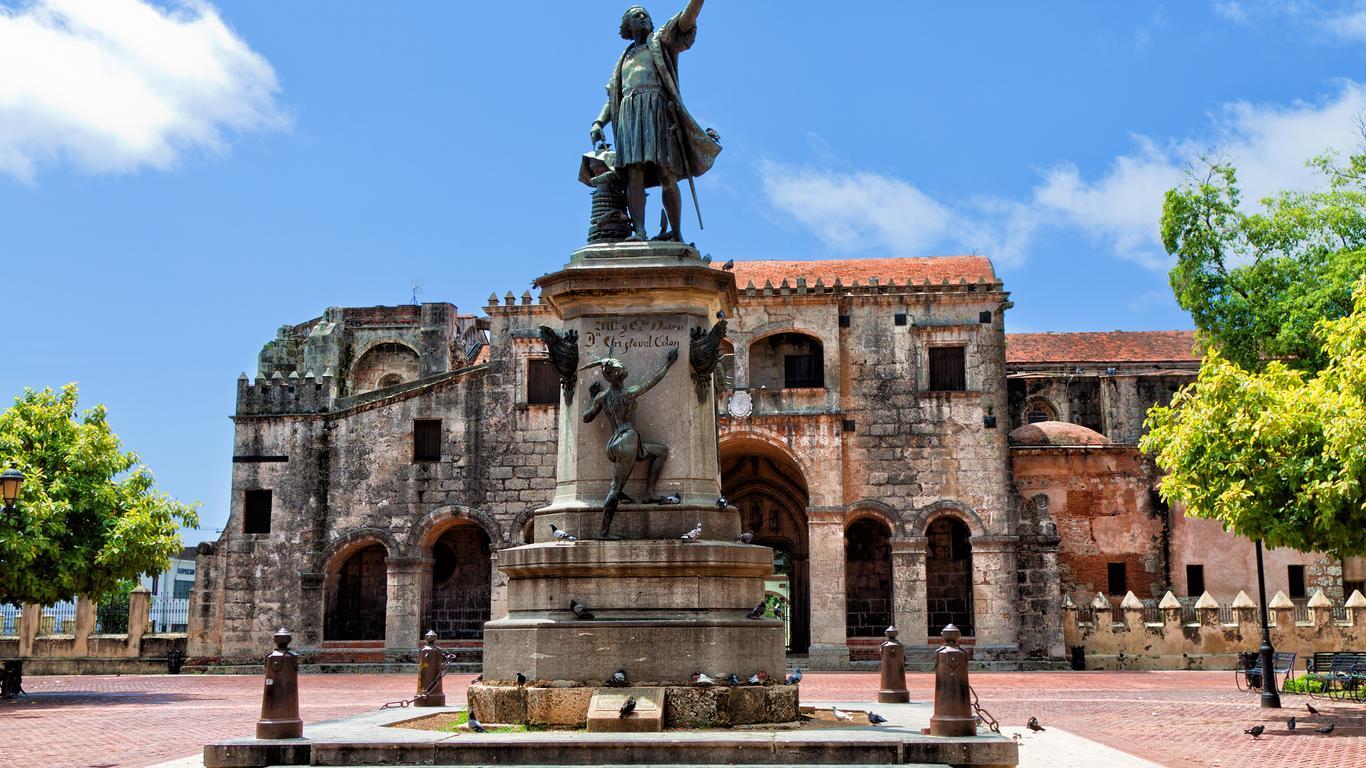
Statue of Columbus faces the cathedral's main entrance; common tour assembly point
Get directionsArzobispo Merino Street, Zona Colonial, Santo Domingo
Main visitor entrance where tickets are purchased
Get directionsThe Catedral Primada de America began in 1512, the year Diego Colón, son of Christopher Columbus, governed the young colony. Construction started in earnest around 1521 under architect Alonso Rodríguez. Funding faltered repeatedly. Royal subsidies from Spain arrived late, and disputes over labor and stone slowed the walls for years. The cathedral was consecrated in 1541, nearly three decades after the first stone. Its coral limestone façade married late Gothic ribbing to Renaissance ornament, a hybrid born of shifting builders and long delays. Pope Paul III elevated the church, and it was recognized as the first cathedral of the Americas. That distinction anchors every santo domingo day trip that begins in the Zona Colonial. A visitor tracing these santo domingo landmarks walks past chapels that once held colonial governors and archbishops. The vaulted nave, the mahogany choir, and the flat coffered ceiling survive as evidence of sixteenth-century craft under Spanish patronage. Controversy shadows the cathedral's later centuries. From 1795, when Spain ceded the island to France, the remains attributed to Columbus were repeatedly moved. Some accounts claim they left for Havana, then Seville. Others insist the true bones stayed in Santo Domingo, later transferred to the Faro a Colón in 1992. Spain and the Dominican Republic still dispute which city holds the navigator. This unresolved question draws many santo domingo day trip tours toward the cathedral's transept. The building endured hurricanes, the 1586 sack by Francis Drake, and centuries of weathering. Twentieth-century restorations stabilized the structure, and UNESCO inscribed the Colonial City in 1990, protecting the Catedral Primada as heritage. Today a santo domingo cathedral tour reveals patched masonry beside original coral stone, a palimpsest of five hundred years. Modern conservators still monitor the arches. Visitors booking a santo domingo day trip tour encounter a monument shaped by delay, dispute, and repair, its bells still marking the hours above Arzobispo Merino Street. Those weighing santo domingo day trip tickets find a structure whose long, contested history remains legible in its stones.
Diego Colón governs as construction of the cathedral is authorized in the new colony.
Architect Alonso Rodríguez begins building the coral-limestone cathedral in earnest.
The cathedral is consecrated as the first cathedral of the Americas.
Francis Drake sacks Santo Domingo and occupies the cathedral during his raid.
Spain cedes the island to France, prompting the disputed removal of Columbus's remains.
UNESCO inscribes the Colonial City, protecting the Catedral Primada as heritage.
The Faro a Colón receives remains attributed to Columbus, deepening the ownership dispute.
Stand at the center of the plaza facing the cathedral's coral limestone facade, with the bronze Columbus statue framed to one side and the twin bell towers rising behind. Early arrivals on a santo domingo day trip get the square nearly empty, letting the full width of the facade fit in frame without passersby crowding the shot.
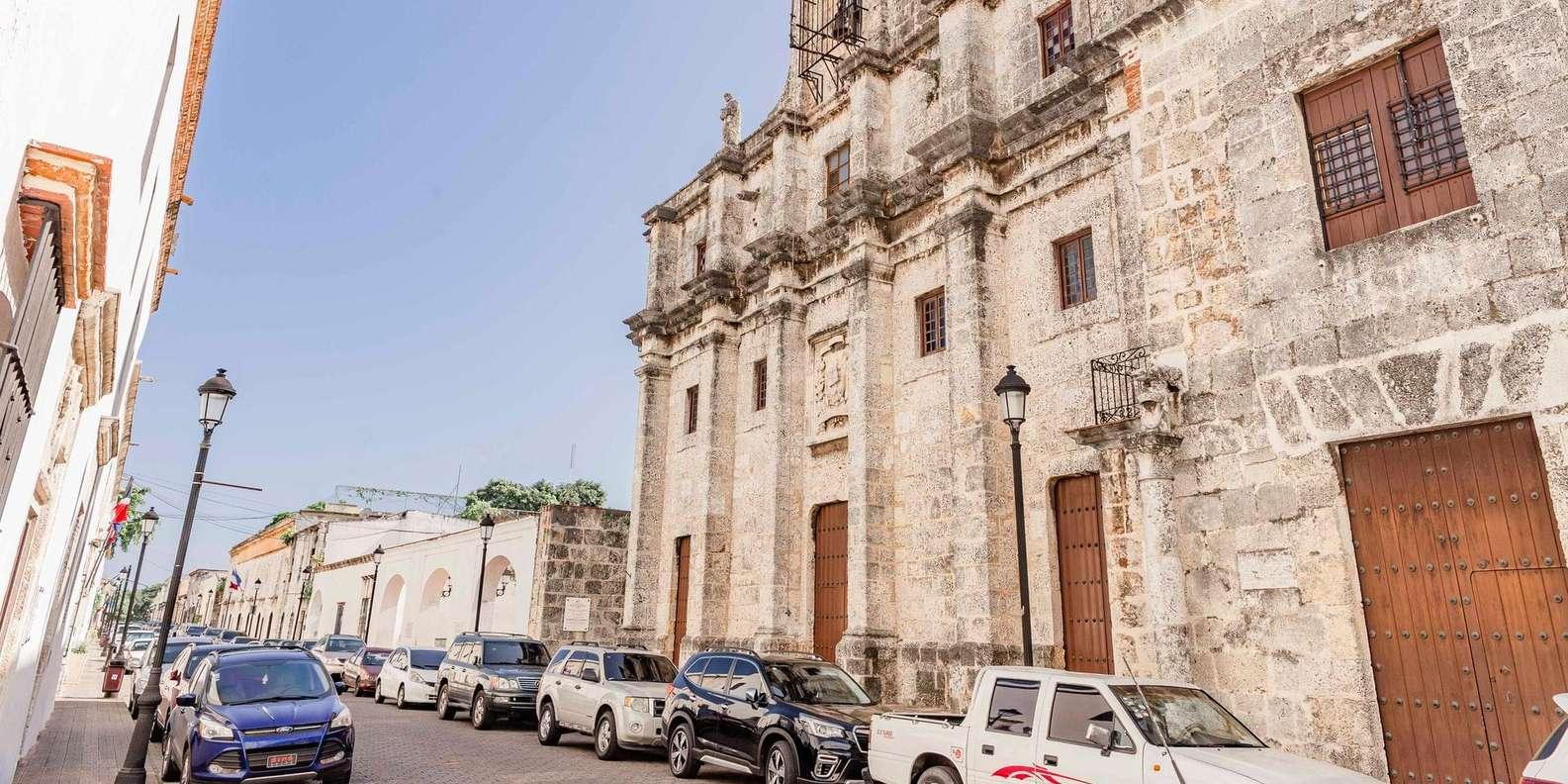
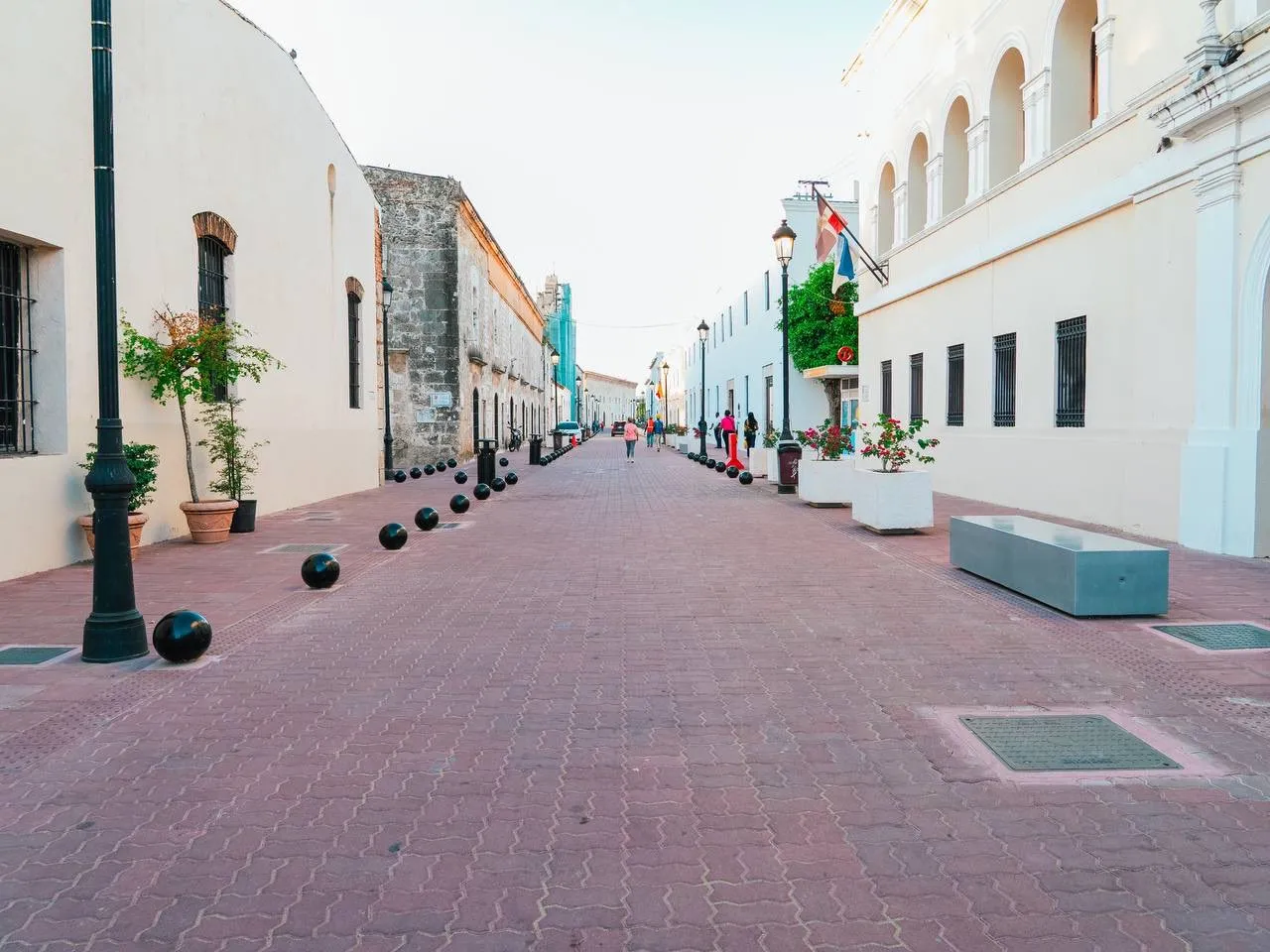
Walk the length of the oldest paved street in the New World, framing the colonial facades, wrought-iron balconies, and worn cobblestones in a single vanishing-point shot toward Fortaleza Ozama. Shoot from the street's center near the National Pantheon for the classic corridor angle.
This narrow pedestrian alley on the cathedral's south side is lined with wrought-iron balconies and bougainvillea spilling over the walls, leading to the small Plazoleta de los Curas. Stand near the entrance arch and shoot down the passage toward the far gate for a flower-draped, color-saturated frame.
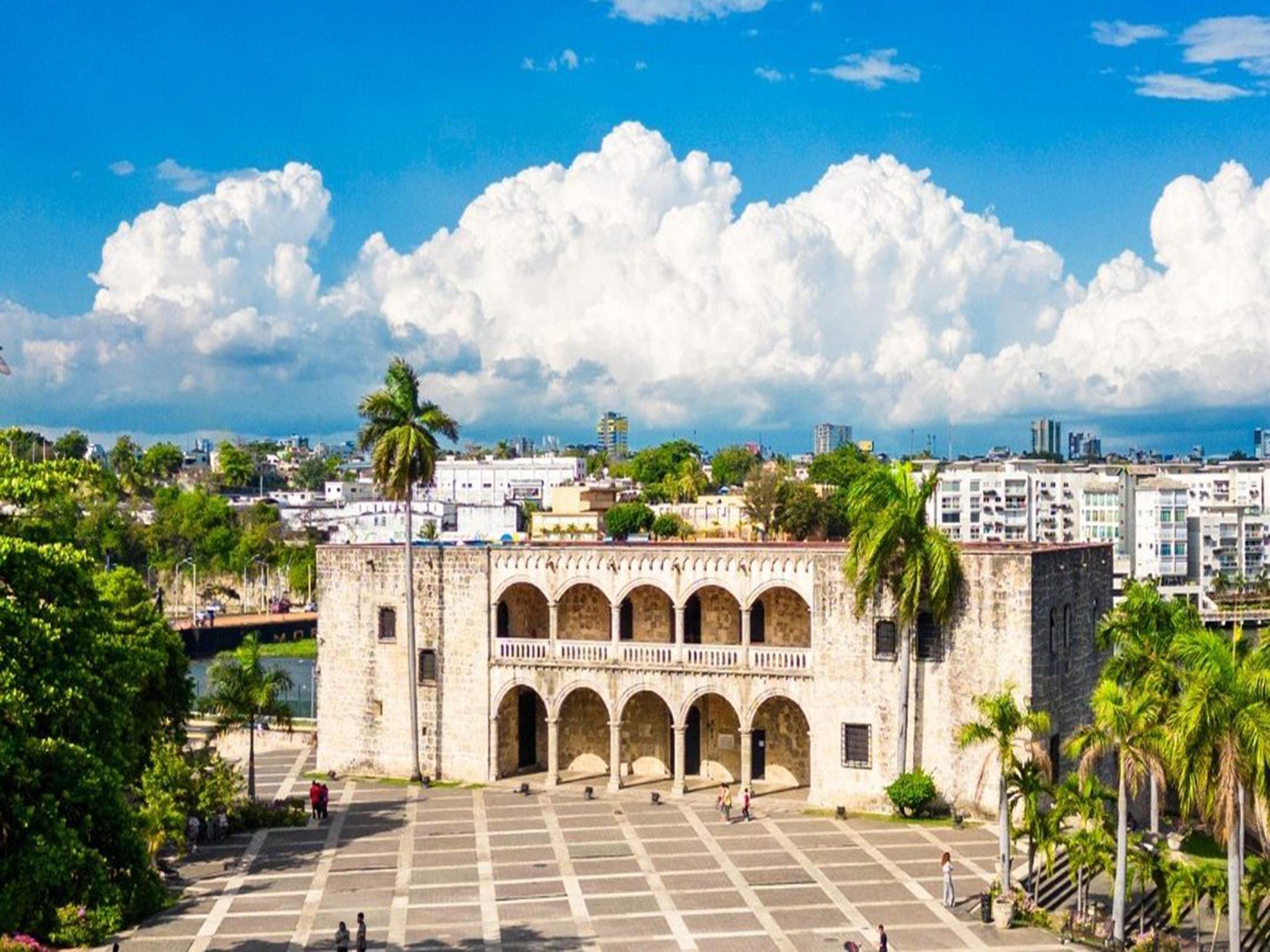
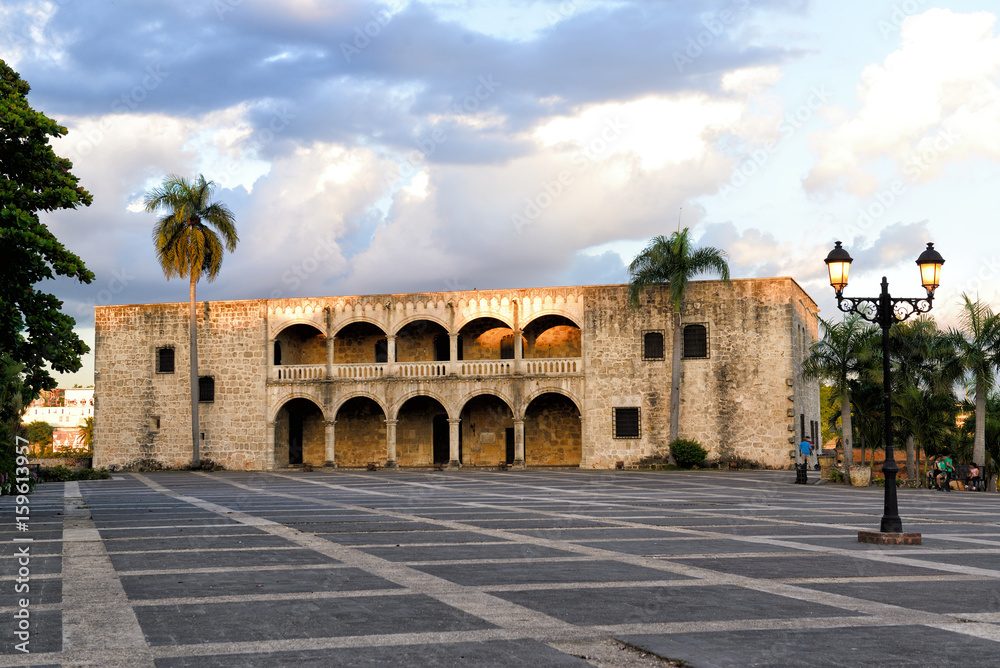
This wide open square beside the Alcázar de Colón gives the widest architectural frame of the area, with the fortress facade on one side and the harbor bluff behind. Position yourself at the plaza's edge to include both the stone facade and open sky for scale.
A santo domingo day trip to the cathedral works well with kids if you build in a Parque Colón break and dodge the cobblestones early. It is a short, walkable stop rather than a sprawling attraction, so pacing is more about crowds and heat than distance.
The Zona Colonial's cobblestone streets around Arzobispo Merino Street are uneven, so a compact umbrella stroller or baby carrier handles the approach far better than a full-size stroller frame.
Toddlers and up manage fine since the visit itself is brief, but kids under 3 tend to do better carried given the crowds and stone floors inside.
Arrive in the 08:30–10:30 window before tour groups and midday heat build up, keep the cathedral portion to 20-30 minutes with young kids, then head across to Parque Colón for open space to run.
Mass draws crowds and a more solemn atmosphere, so a skip-the-line cathedral visit outside service times keeps the pace relaxed for restless children.
There are no dedicated baby-change facilities inside the cathedral itself, so plan to use a café or restaurant near Parque Colón for diaper changes or nursing breaks.
If a downpour hits, the covered arcades and cafés ringing Parque Colón give kids shelter within steps of the cathedral entrance.
There's no café inside the cathedral itself, but the surrounding streets of the Zona Colonial pack in options within a two-minute walk, so nobody planning a santo domingo day trip needs to bring their own food. Breakfast, hearty Dominican plates, and sit-down dinners are all reachable on foot from Parque Colón.
Open from 7:00 AM, so it works well for a coffee and pastry before the 08:30 arrival window opens for the day. Outdoor tables face the plaza and cathedral facade, though seating fills up fast once tour groups arrive. Good for a quick bite rather than a full sit-down meal.
A short walk from the cathedral, this two-story restaurant serves mofongo, sancocho, and goat stew in a colorful, music-filled setting. Evenings get lively with live bands, so lunch is calmer for anyone doing a santo domingo day trip tour earlier in the day. Outdoor seating overlooks the park.
Set inside a 16th-century house on Calle Hostos, a few minutes from Plaza España, it's known for stewed crab, goat stew, and Creole beef. The dining room is intimate with local art on the walls, better suited to a sit-down lunch than a rushed stop. Reservations help on weekends.
Real experiences from real travelers
Our santo domingo day trip started early and we had the Zona Colonial almost to ourselves before the heat set in. The coral-stone façades on Calle Las Damas felt like walking straight into the 1500s, and our guide pointed out details we would have missed alone. Bring water and comfortable shoes for the cobblestones.
Standing in front of the Catedral Primada de América, the oldest cathedral in the New World, was the highlight for me. The Alcázar de Colón and Plaza España were within an easy walk, which made the whole route feel unhurried. Late afternoon light on the limestone was lovely.
Booked one of the santo domingo day trip tours from Punta Cana and the long drive was worth it. Our small group moved through the Fortaleza Ozama and the ruins of San Francisco without feeling rushed. The Caribbean humidity was intense by midday so an early start really helped.
The history in the Ciudad Colonial is remarkable and the guide clearly knew the streets of the first European settlement well. My only note is the transfer time if you come from the east coast resorts, so pace yourself. The Malecón views on the way back made up for it.
Wandering the santo domingo landmarks tour felt relaxed and genuine, not touristy. I loved the shade under the arches at the Alcázar de Colón while the guide explained the Columbus family history. A light breeze off the sea kept the plaza comfortable in the morning.
We grabbed our santo domingo day trip tickets online and the pickup was punctual. Seeing Calle Las Damas, the oldest paved street in the Americas, at opening time meant cool air and empty lanes for photos. The coral-limestone glowed as the sun climbed.
This ciudad colonial santo domingo tour packed a lot into one day without feeling frantic. The Ruinas de San Francisco were quieter than expected and the crumbling arches were a highlight at dusk. Wear a hat, the plazas get bright fast.
The skip-the-line santo domingo entry saved us real time at the cathedral, which was busy that morning. Our guide walked us through the Fortaleza Ozama and the Torre del Homenaje with good stories about the colonial period. Just be ready for strong Caribbean sun by noon.
A santo domingo day trip from Bávaro is long but the Zona Colonial delivers. The warm evening light on the Plaza España and the Alcázar de Colón was the moment I keep remembering. Comfortable sandals are a must on the uneven stones.
The Ciudad Colonial itself is full of genuine history and the cathedral is impressive up close. Midday crowds and heat made a few stretches less pleasant, so an earlier slot would help. Still glad we made the trip out.
Everything you need to know for your journey
The Catedral Primada de America is open Monday through Saturday from 08:00 to 17:00 and is closed on Sundays for worship.
The main entrance on Arzobispo Merino Street is level with the street, though some interior chapels sit a step or two above the main nave floor.
Large backpacks, tripods, flash photography equipment, food, open drinks, and pets other than service animals are not permitted inside during a santo domingo day trip.
Photography without flash is allowed throughout most of the interior, but flash and tripods are discouraged near the altar and photography pauses during mass.
Arriving between 08:30 and 10:30 gives cooler temperatures and fewer tour groups before midday heat and cruise-ship crowds build up.
Yes, shoulders and knees must be covered; shawls are available to borrow at the entrance if needed.
No, food and drink including bottled water must be finished before entering the cathedral.
A taxi from Las Américas International Airport to the Zona Colonial takes roughly 30–35 minutes and costs around $24–35 USD.
Yes, children enter free and the cool stone interior offers a break from the heat, making it a manageable stop on a family santo domingo day trip.
Independent entry at 60 DOP is paid on arrival and isn't refundable, while most organized tour operators allow free cancellation up to 24 hours before the scheduled start.
The Alcázar de Colón, Plaza de España, and Fortaleza Ozama all sit within a 10-minute walk and combine naturally with a santo domingo day trip.
Entrance is 60 DOP per adult without an audio guide, per person.
Former residence of Diego Columbus, built in the early 16th century and now a museum of colonial-era furnishings and artifacts. It anchors the northern end of Plaza de España.
The central plaza directly facing the cathedral's main facade, marked by a statue of Christopher Columbus. Vendors, cafés, and shoeshine stands line its edges.
One of the oldest military fortifications in the Americas, dating to the early 1500s, with the Torre del Homenaje offering river views. It sits along the Ozama riverfront.
A former royal courthouse turned museum documenting Taíno, Spanish colonial, and early Dominican history around a shaded courtyard.
Considered the oldest paved street in the Americas, lined with colonial mansions connecting the cathedral to the Alcázar.
A broad plaza fronting the Alcázar de Colón, ringed by restored colonial warehouses now used as restaurants and cafés.
The historic old town itself holds the highest concentration of boutique hotels and guesthouses within walking distance of the cathedral.
Restored colonial buildings along the pedestrian Calle El Conde house several small boutique properties near Parque Colón.
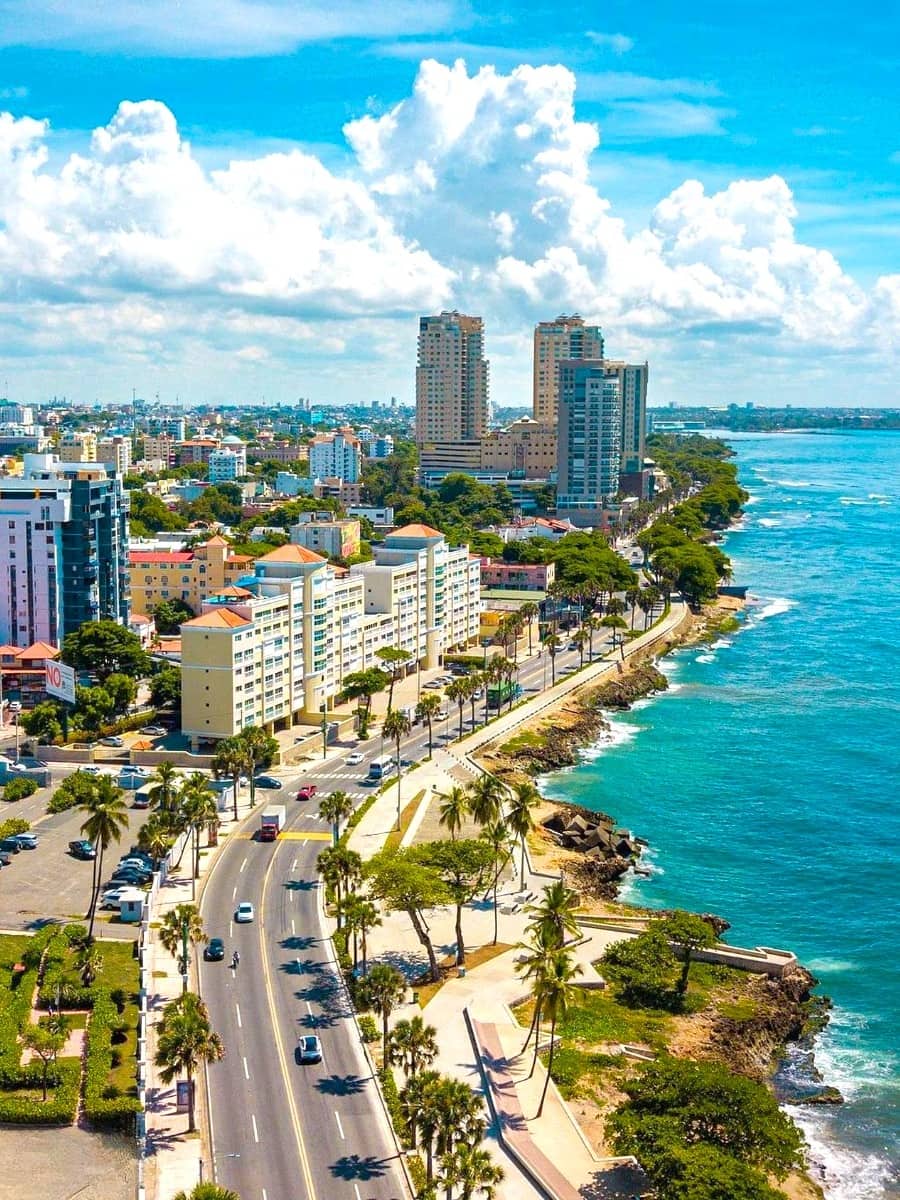
Santo Domingo's seafront avenue offers mid-range chain hotels with ocean views, a short taxi ride from the Zona Colonial.
The city's modern business district holds most of Santo Domingo's upscale international hotel brands.
Join thousands of happy travelers who have discovered this incredible experience
Book Your Experience Now